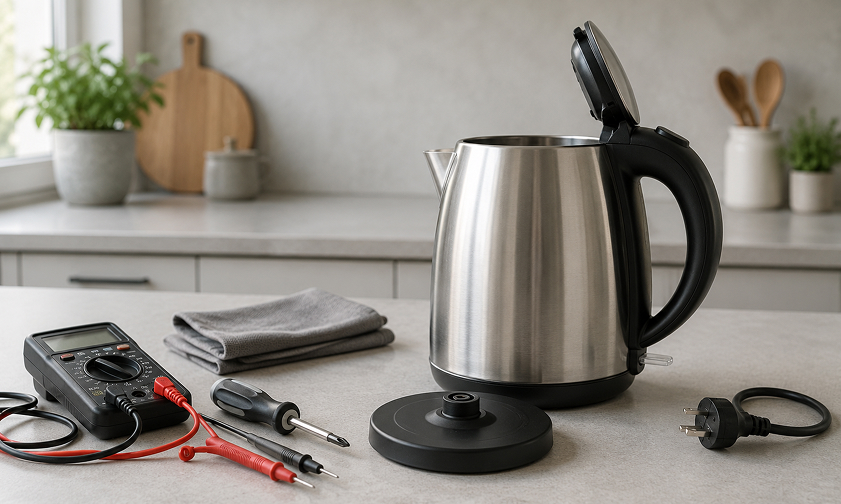
Before you toss it, know this: most electric kettle faults are fixable in under 10 minutes with no tools. A dirty contact, a tripped boil-dry cutout, or a bit of limescale causes far more “dead” kettles than a genuinely burnt-out element. This guide is symptom-first — find your exact problem below, jump to it, and skip the rest.
Quick Fix Finder: Match Your Symptom to a Solution
Pick the line that describes what your kettle is doing and go straight there.
| Symptom | Most likely cause | Go to |
|---|---|---|
| No power, dead, won’t turn on | Outlet, cord, dirty base contacts, blown fuse | No power |
| Turns on but water stays cold | Limescale on element, tripped thermal cutoff | Won’t heat |
| Water pooling under or around it | Overfilling, worn seal, cracked body | Leaking |
| Lid stuck, won’t latch or open | Limescale, loose hinge, broken cap spring | Lid problems |
| Switch won’t stay down / clicks off | Boil-dry trip, debris, worn locking tab | Switch problems |
| Loud, whistling, or rattling | Limescale (usually), loose part | Strange noises |
| Fishy or burning smell | New residue — or overheating plastic | Smell — stop and read |
Can an electric kettle be repaired at all? Often, yes — the mechanical and mineral problems above are very DIY-friendly. What’s rarely worth repairing is a sealed heating element or a cracked body, and we’ll be honest about that at the end.
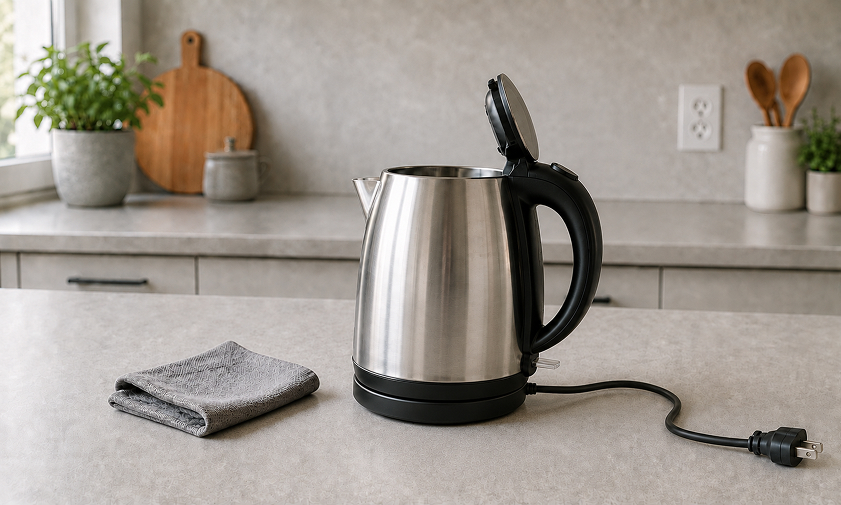
Electric Kettle Has No Power or Won’t Turn On
If nothing lights up, work through this in order — it’s almost always one of the first three.
- Rule out the obvious. Try a different wall outlet, and check the cord for kinks, fraying, or scorch marks. A damaged cord is a replace-the-cord (or replace-the-kettle) situation, not a bodge job.
- Reseat the kettle on its base. Lift it off and set it back down squarely. Cordless kettles only power up when the central contact lines up — a kettle sitting slightly off will look dead.
- Clean the contacts. The metal connector on the base and the matching ring under the kettle collect grime and mineral film. Unplug, let everything dry, and buff both with a dry cloth or a light pass of fine-grit sandpaper. This single step revives a surprising number of “broken” kettles.
- Reset boil-dry protection. If it was ever switched on empty or nearly empty, a safety cutout may have latched off. Unplug, let it cool for 15–20 minutes, fill with water past the minimum line, then plug back in.
- Check the plug fuse. On UK-style plugs, there’s a replaceable fuse inside the plug — swap it for a known-good one of the same rating before assuming the worst.
Still nothing? The fault is likely the internal switch or thermal fuse — see the switch section below. Why did your electric kettle stop working suddenly with no warning? Nine times out of ten it’s a tripped cutoff or a dirty contact, not a dead motor — there’s no motor to die.
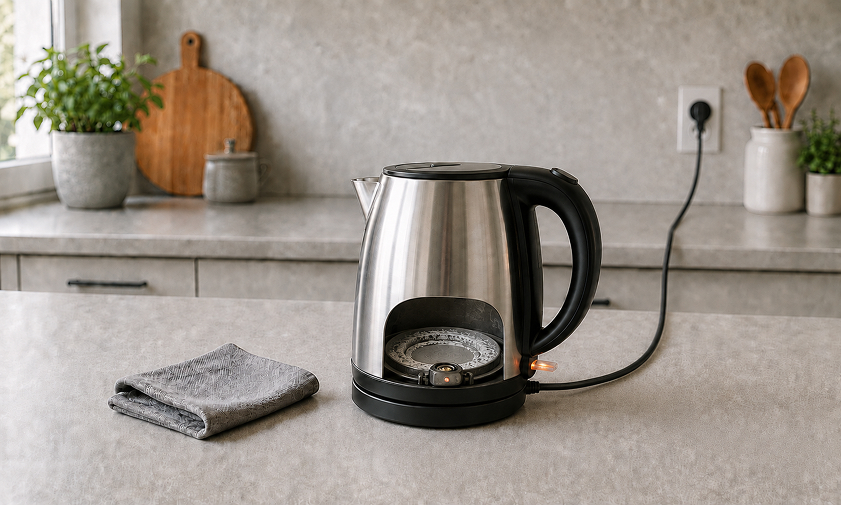
Kettle Turns On But Won’t Heat (Element and Thermostat)
If the light comes on but the water stays cold, power is reaching the kettle — so the problem is the heating circuit, not the plug.
Descale first. A crust of limescale on the element acts like insulation, and it’s the number-one cause of weak or no heating. Fill with equal parts white vinegar and water, boil (or let it sit if it won’t boil), leave 20–30 minutes, then scrub gently and rinse twice. This is also how you fix an electric kettle that’s not heating properly or heats far too slowly.
Reset the thermal cutoff. Kettles have a thermal cut-off that can latch open after an overheat. Unplug, let the kettle cool completely — a full 30 minutes — then plug in and try again. This clears a tripped thermostat in many cases.
How do you know if the heating element is broken? If it’s descaled, fully cooled, correctly seated, and still won’t warm the water, the element or its internal thermal fuse has likely failed. And here’s the hard truth on how to fix an electric kettle heating element: in most budget and mid-range kettles the element is sealed into the base and not designed to be replaced. Unless yours is a high-end model with published spare parts, a dead element is a replace signal, not a repair.
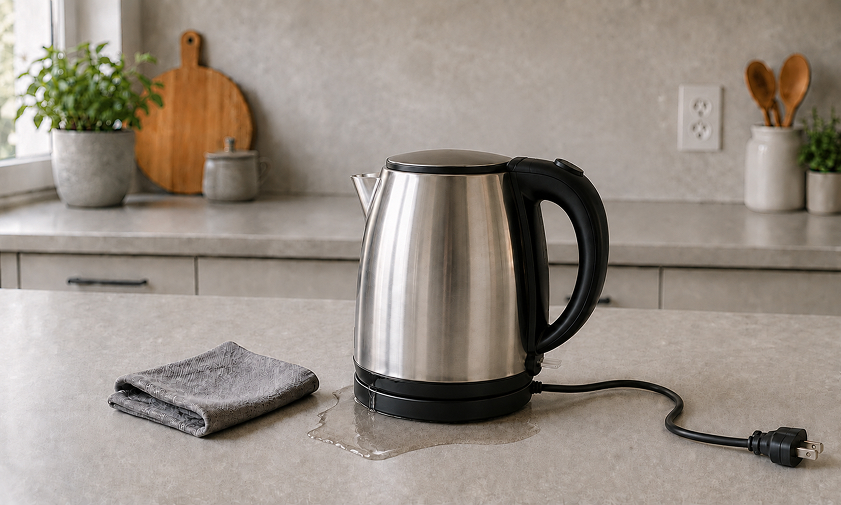
Fixing a Leaking Electric Kettle
Why is your electric kettle leaking? Start with the least alarming cause and move down:
- Overfilling. Water above the max line spits out of the spout during a vigorous boil and looks like a leak. Fill below max and see if it stops.
- A worn gasket or seal. The rubber/silicone seal around the base collar or under the lid hardens and cracks with age. Many kettles sell a replacement seal cheaply — how you fix a leaking electric kettle is often just swapping this one part.
- A hairline crack in the body. Food-safe silicone sealant can buy you time, but treat it as temporary. A cracked kettle body is not a safe long-term fix.
Safety: if water is reaching the base, the cord entry, or the electrical connection, unplug it immediately and stop using it. Water and live contacts don’t mix.
Lid Won’t Open, Close, or Latch Properly
A sticky or floppy lid is usually mechanical and very fixable. How to fix an electric kettle lid, in order:
- De-scale the latch. Mineral buildup gums up the hinge and catch. Soak the affected area or wipe with vinegar, then work the lid a few times.
- Tighten the hinge. A small Phillips screwdriver often finds a loose screw at the hinge point.
- Check the cap spring. Push-button lids use a small spring behind the button to hold the catch. When it pops loose or fatigues, the lid won’t stay shut. Reseating or replacing that cap spring — sold as a part for many models — restores the snap.
- Lubricate stiff hinges with a dab of food-grade lubricant, never cooking oil, which goes rancid.
On/Off Switch Problems (Won’t Stay Down or Clicks Off Early)
How do you fix an electric kettle switch that won’t stay down? First, make sure it’s actually a switch fault and not the kettle doing its job — a switch that clicks off early is frequently boil-dry protection triggering because the water is below the minimum line, or the thermostat sensing steam. Fill properly and let it cool before blaming the switch.
If it still won’t latch:
- Brush debris and mineral residue out of the switch channel with a dry soft brush.
- Look for a dislodged internal spring — the lever needs it to hold position.
- If the plastic locking tab or the contacts are visibly worn, that’s a genuine part failure. On a cheap kettle it’s usually not worth a professional repair; on a premium one, an authorized service or a matching switch assembly is the route.
How to Reset a Chefman Electric Kettle
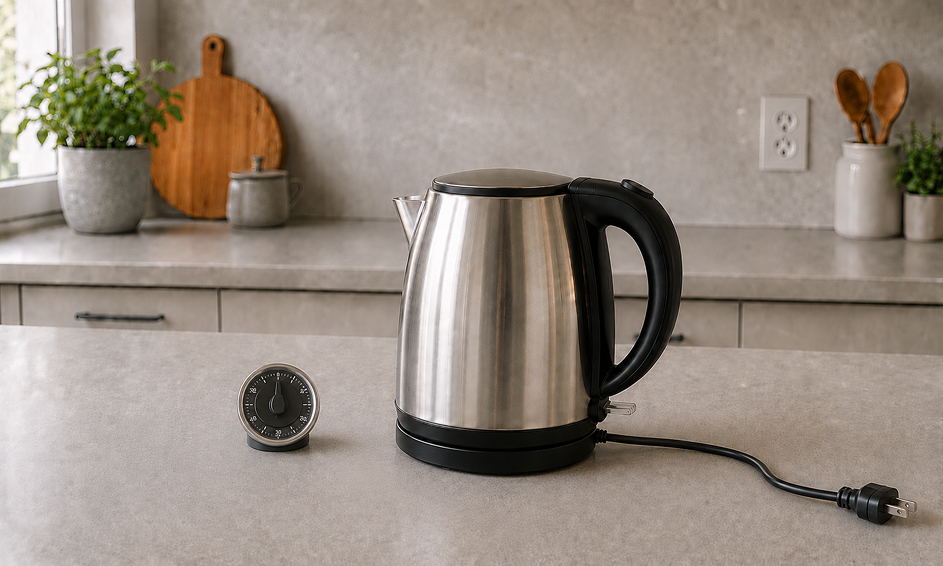
How do you reset a Chefman electric kettle? Most models don’t have a labeled reset button — a power cycle does it. Unplug the base, wait 60 seconds, reseat the kettle, and plug back in; this clears a tripped cutoff after a dry boil. If yours has a boil-dry switch on the base, let it cool fully first so it can reset. On digital/temperature-control Chefman models, hold the power and temperature buttons together for a few seconds to clear the control board. If it still won’t heat after that, the thermal fuse has likely blown — check your warranty before anything else.
How to Reset a Cuisinart Electric Kettle
How do you reset a Cuisinart electric kettle? Standard reset: unplug for 30–60 seconds, reseat the kettle on its base, and plug back in. For a stubborn fault or a frozen control panel on the digital models, unplug for a full 5 minutes to let the control board memory clear completely, then try again. If there’s still no heat after a reset, you’re usually looking at an element or thermal-cutoff failure — and Cuisinart’s multi-year warranty covers that on most models, so contact them rather than opening the base.
Strange Noises: What’s Normal and What’s a Warning
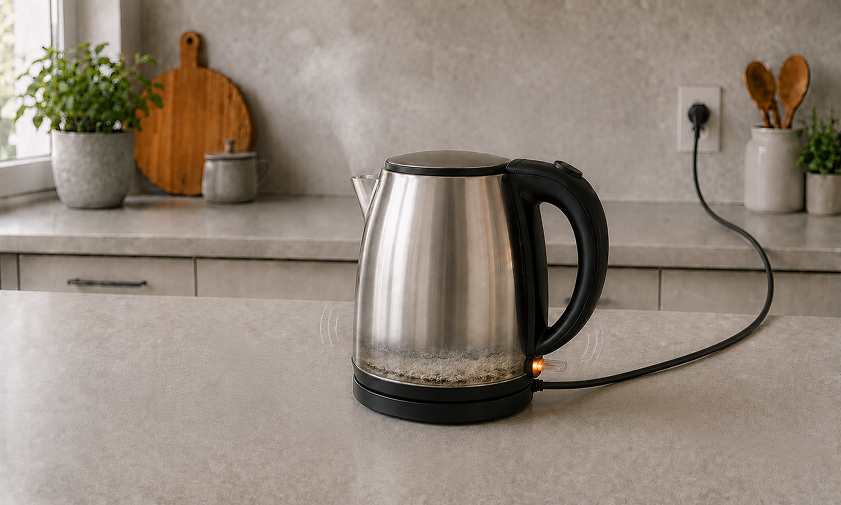
Why does your electric kettle make so much noise? Good news first: a lot of it is normal. The popping, crackling, rumbling, and even a whistling or high-pitched hum as it approaches a boil are just steam bubbles forming and collapsing against the element. A kettle that has gone noisy or louder over time almost always has one culprit: limescale. Mineral deposits trap steam bubbles and make them burst harder, so why your kettle is so loud usually has the same answer as why it heats slowly — buildup. Descale it (vinegar soak, above) and the racket typically drops right down.
What isn’t normal is a loud metallic clang, rattle, or grinding — that points to a loose internal component, and it’s worth inspecting before further use.
Fishy or Burning Smell: When to Stop and Unplug
Why does your electric kettle smell fishy? There are two very different answers, and telling them apart matters.
- Brand-new kettle: a faint plastic or fishy odor for the first few uses is manufacturing residue burning off. Boil and discard two or three full kettles of water and it should clear.
- Older kettle: an ongoing fishy or musty smell usually comes from mineral scale or bacteria in stagnant water. Descale, wash the interior, and empty it after each use.
Stop immediately if: the fishy or burning smell comes with heat, melting, or discoloration near the base or cord. That’s overheating plastic or resin — a genuine fire risk. Unplug it, don’t use it again, and don’t try to repair it. This is a replace, not a fix.
When to Stop Fixing and Just Replace It
We’re firm on this because most guides won’t be. Repair is worth it for dirty contacts, limescale, seals, lids, springs, and resets. Repair is not worth it for a sealed dead heating element, a cracked body, a damaged cord, or any sign of overheating plastic. A new, reliable budget kettle costs about what a service call would, and it comes with a warranty and none of the safety guesswork.
The other question worth asking is age. Electric kettles typically last three to five years of daily use, so a well-used kettle with a failed element has simply reached the end of its life. If you’re replacing, our complete guide to where to buy an electric kettle covers what actually lasts, and it helps to understand how an electric kettle works so you can spot a well-built one. New kettle in hand? Start it off right with our first-time guide to using an electric kettle, and if you ever wonder about the water itself, here’s whether water boiled in an electric kettle is safe.
Frequently Asked Questions
Why has my electric kettle suddenly stopped working?
The most common causes are a tripped boil-dry cutoff, dirty contacts between the kettle and its base, or a blown plug fuse — not a dead motor, since there isn’t one. Unplug, clean both contacts, let it cool for 15–20 minutes, refill past the minimum line, and try again before assuming the element has failed.
How do I know if my kettle’s heating element is broken?
If the power light comes on but the water stays cold after you’ve descaled the element, let the kettle cool completely, and reseated it properly, the element or its internal thermal fuse has likely failed. In most budget and mid-range kettles the element is sealed and not replaceable, so that usually means it’s time to replace the kettle.
How do I reset my Chefman or Cuisinart electric kettle?
For both, unplug the base, wait 30–60 seconds, reseat the kettle, and plug back in — this clears most tripped cutoffs. For a stubborn fault, unplug a Cuisinart for a full 5 minutes to reset its control board, or hold power plus temperature on a digital Chefman. If it still won’t heat, the thermal fuse has likely blown and you should check the warranty.
Is it safe to use a kettle that smells fishy or burnt?
A faint fishy or plastic smell in the first few uses of a new kettle is harmless residue burning off. But if the smell comes with heat, melting, or discoloration near the base or cord, stop immediately — that’s overheating plastic and a fire risk. Unplug it, stop using it, and replace it rather than trying to repair it.
Leave a Reply