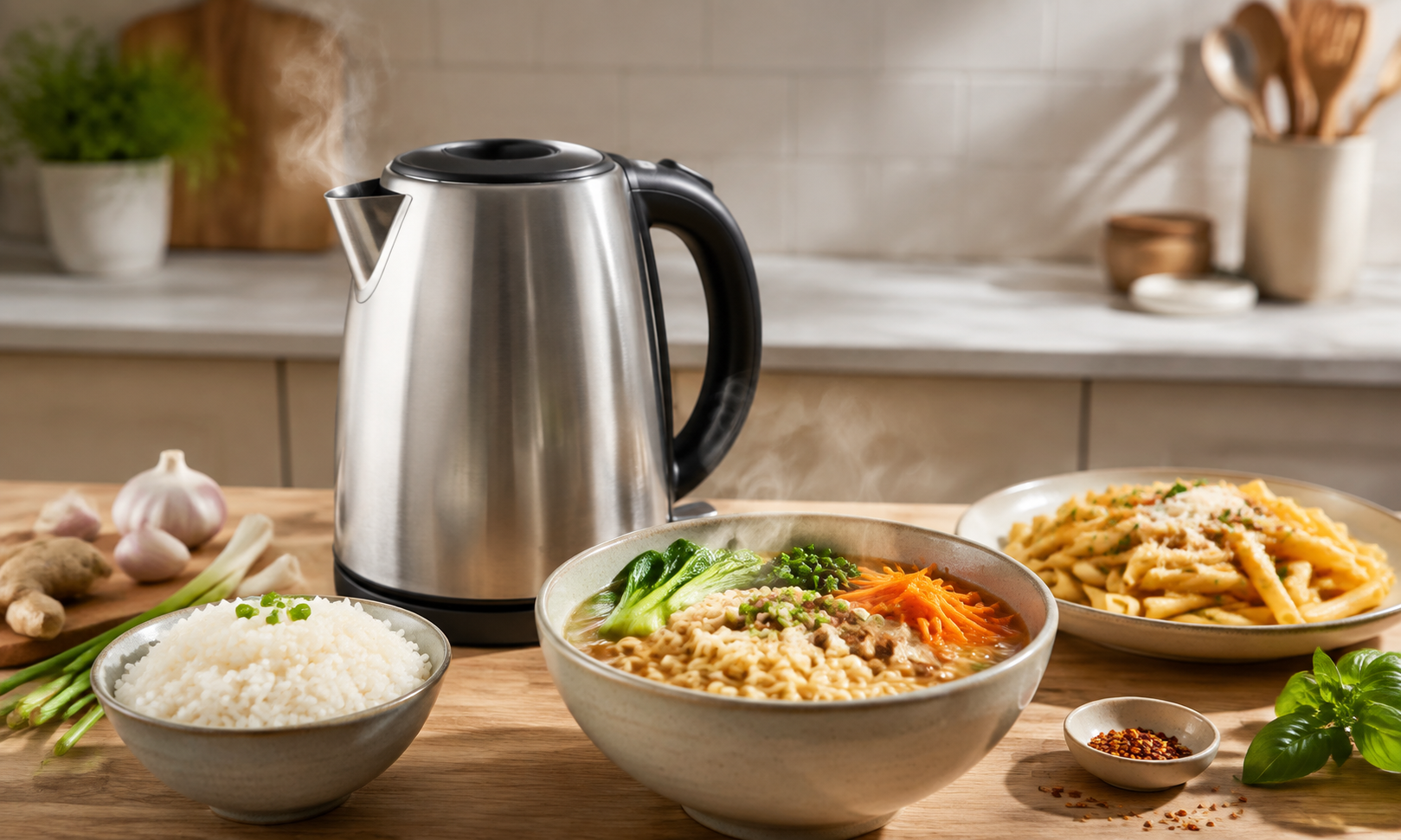
Yes, you can cook rice in an electric kettle. We’ve done it in dorm rooms, hotel rooms, and offices where a kettle was the only appliance on the desk. It won’t replace a rice cooker for a family dinner, but for one or two servings it works — if you know the ratios, the timing, and the two or three things that will otherwise leave you scrubbing burnt starch off the heating element.
This is the full roundup: rice first, then ramen, pasta, oatmeal, popcorn, reheating leftovers, and even distilled water. And because most guides skip it, we finish with an honest list of what you should never put in your kettle.
Can You Really Cook Rice in an Electric Kettle?
Yes — with caveats. A kettle is a fast, powerful water boiler (see how many watts an electric kettle uses for why it heats so quickly), and that same power is what cooks rice. The catch is that most kettles are built to boil water and shut off, not to hold a gentle simmer. So you’ll usually work with the auto shut-off rather than against it.
There are two ways to do it:
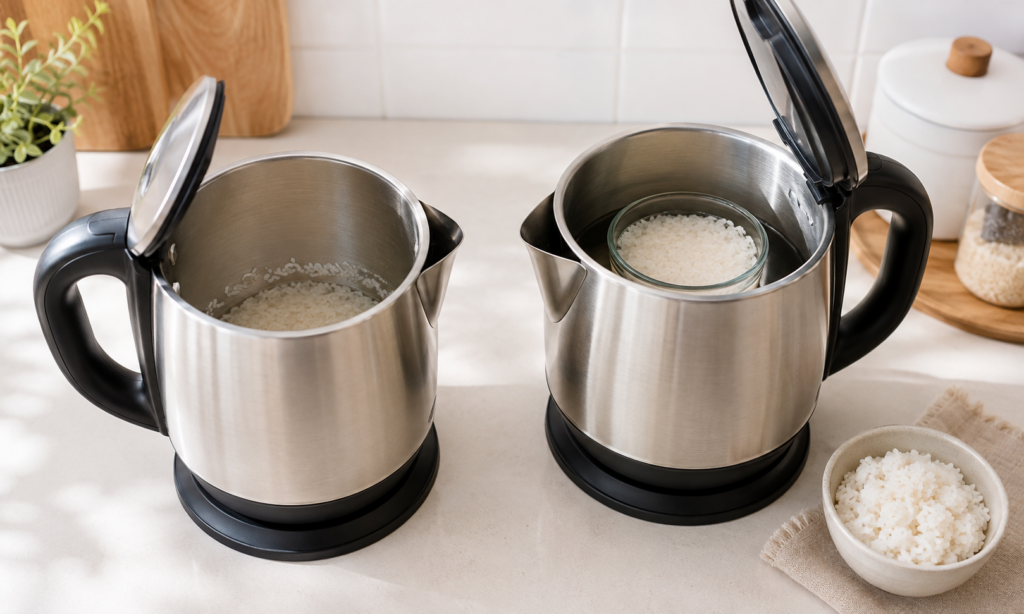
- Direct-in-kettle: rice and water go straight into the kettle. Fastest, but the highest risk of sticking and burning at the base.
- Bowl-in-kettle steaming: rice and water go in a heatproof bowl that sits inside the kettle over boiling water. Cleaner, gentler, better for brown rice.
Best for small portions — one to two servings. Push past that and the kettle overfills, boils over, and cooks unevenly.
What You’ll Need
- Rice (white, brown, or instant)
- Water and, ideally, a measuring cup
- A kettle with at least 1 litre capacity and 1000W or more — lower-wattage travel kettles struggle to hold a boil long enough
- A fork or spoon for stirring
- Optional: a small heatproof or microwave-safe bowl for the steaming method, and a strainer for pasta
A wide-base kettle beats a tall narrow one here — the rice spreads out and cooks more evenly.
Method 1: Direct-in-Kettle (Fastest, Riskiest for Sticking)
This is the answer to “can I cook rice in an electric kettle” the quick way, and it’s fine for white or instant rice.
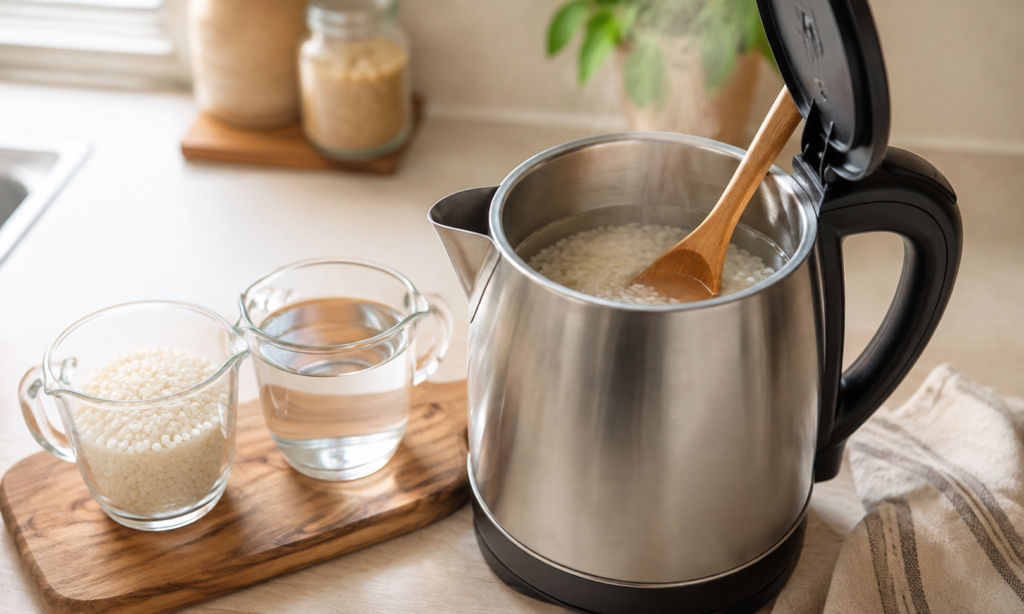
- Rinse the rice in a cup of water two or three times until the water runs clearer. This removes surface starch — the main cause of sticking and gumming.
- Use a 1:2 ratio for white rice: half a cup of rice to one cup of water. Add both to the kettle.
- Bring it to a boil, then let the kettle switch off. Stir once, flip it back on, and repeat the boil-and-rest cycle a few times over about 12–15 minutes.
- Stop when the water is absorbed. Let it sit covered, off, for 5 minutes so the steam finishes the grains.
To prevent sticking, stir every couple of minutes and never let it run dry between cycles — the moment water is gone, the base scorches fast.
Method 2: Bowl-in-Kettle Steaming (Cleaner, More Reliable)
Put your rinsed rice and water into a heatproof bowl, then set the bowl inside the kettle with an inch of water around it (not touching the rice). Boil, let it rest with the lid down 15–20 minutes, and re-boil once if needed.
Because the rice never touches the hot element directly, you get almost no sticking, far easier cleanup, and fluffier results. This is our go-to for brown rice or any time you want the rice to come out properly separated rather than gummy.
White Rice vs. Brown Rice vs. Instant Rice: Ratios & Times
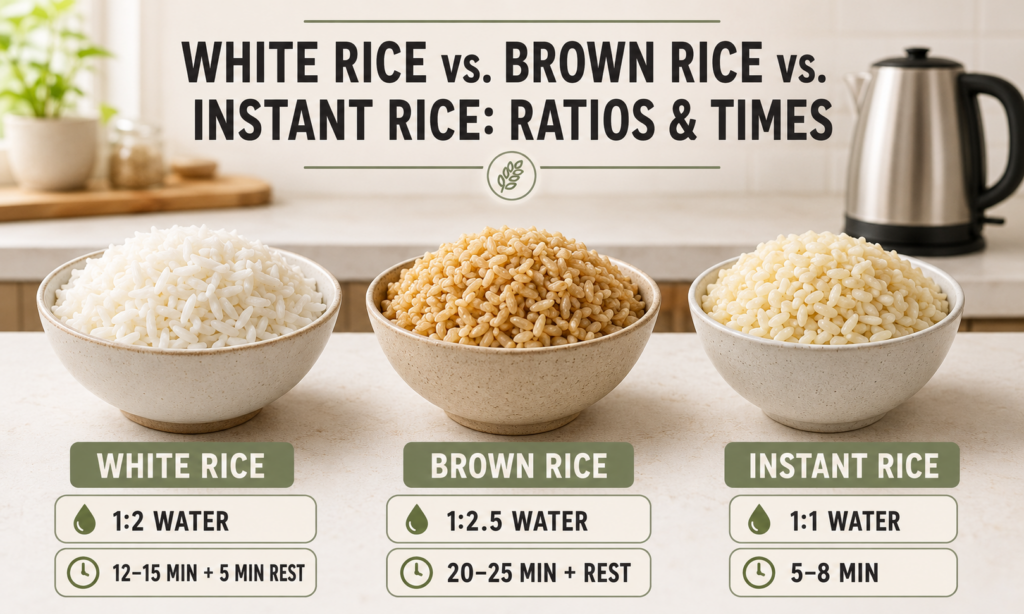
The single biggest variable is the type of rice. Here’s how to make rice in an electric kettle for each:
| Rice type | Rice-to-water ratio | Approx. time | Notes |
|---|---|---|---|
| White (basmati, jasmine) | 1:2 | 12–15 min + 5 min rest | Best all-round performer; long-grain sticks least |
| Brown rice | 1:2.5 | 20–25 min + rest | Use the bowl method; needs more water and patience |
| Instant / parboiled | 1:1 | 5–8 min | Often just needs boiling water poured over and a covered soak |
Basmati and jasmine cook cleanest in a kettle — they’re low-starch and forgiving. Sticky short-grain and sushi rice are the hardest to pull off directly and are much better in the bowl.
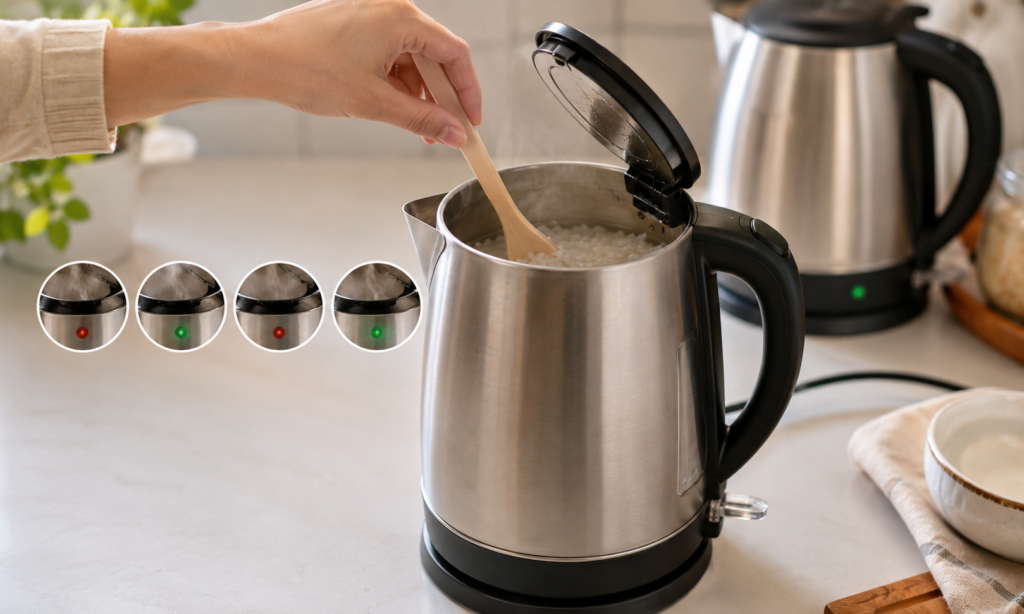
Cooking Rice in a Pigeon, Prestige, or Other Popular Kettle
Pigeon and Prestige kettles — and most budget models — have an aggressive auto shut-off that triggers the instant the water boils, well before rice is done. That’s not a fault; it’s a safety feature. Just plan to manually re-boil three or four times, stirring between cycles, until the water is absorbed.
A few models have a keep-warm or lower simmer setting; if yours does, use it after the first boil for a gentler cook. Whatever the brand, the same rules apply: small portions, rinse first, stir often, and don’t walk away.
Troubleshooting: Sticking, Burning, and Uneven Cooking
- Stir and check every few minutes. Rice at the bottom heats first and burns first.
- Never fill past the MAX line. Rice foams as it cooks and will boil over, tripping the shut-off and making a mess.
- Catching a burnt smell? Kill the power, don’t stir the bottom, and gently spoon the good rice off the top. The scorched layer at the base is a loss — leave it.
- Crunchy in the middle? It needed more water or another boil cycle. Add a splash of hot water, cover, and re-boil once.

Beyond Rice: What Else You Can Cook in the Same Kettle
Once you’ve cracked rice, the rest is easy. Here’s the whole dorm-survival menu.
Ramen and Instant Noodles
The safest way to make ramen with an electric kettle is to not cook the noodles in the kettle at all. Boil water, break the noodle block into a heatproof bowl, pour the water over, cover with a plate, and wait 3–5 minutes. Stir in the seasoning last. If you prefer cooking noodles directly, use a bowl-in-kettle so seasoning and oil never hit the element.
Pasta
To cook pasta with an electric kettle, boil a full kettle, pour it over pasta in a heatproof container, cover, and let it steep — thin shapes like spaghetti or macaroni take 10–12 minutes, checking for doneness. Re-boil and swap the water once if it cools too fast, then drain through a strainer.
Oatmeal
Oats are the easiest thing on this list. Put rolled oats in a bowl, pour boiling water over at a 1:2 ratio, cover, and steep 5 minutes. No direct heat, no scrubbing.
Popcorn
You can make popcorn in a kettle: a teaspoon of oil and a small handful of kernels directly in the base, lid on, swirling gently until the popping slows. Be honest with yourself first — hot oil is hard on the element and seals, and residue builds up fast. Do it rarely, or dedicate an old kettle to it.
Reheating Leftovers
Use the bowl-in-kettle steam method to reheat rice, soup, or curry. Boil water around a bowl of leftovers, cover, and let the steam warm it through in a few minutes. Never tip loose leftovers straight into the kettle.
Making Distilled Water
You can make distilled water with an electric kettle by capturing the steam. Boil the kettle with the lid open and hold a cool metal or glass bowl in the rising steam so it condenses and drips into a clean container. It’s slow and yields small amounts, but it’s real distilled water in a pinch.
What NOT to Try in Your Electric Kettle
This is the part most guides bury. Read it before you improvise.
- No milk-based dishes directly. Milk scorches and curdles against the element and is miserable to clean — here’s why boiling milk in a kettle is a bad idea.
- No raw meat, eggs out of shell, or chunky solids straight in the kettle — they clog the base and create food-safety risks.
- No salty, acidic, or heavily seasoned liquid against the element. Salt and acid corrode the stainless steel and spout over time.
- Never let it run dry or overfill past MAX. Dry-boiling is the fastest way to kill a kettle.
- Know the warranty risk. Cooking food voids the warranty on many kettles. If you’ll do this often, dedicate one cheap kettle to cooking and keep another for drinking water.
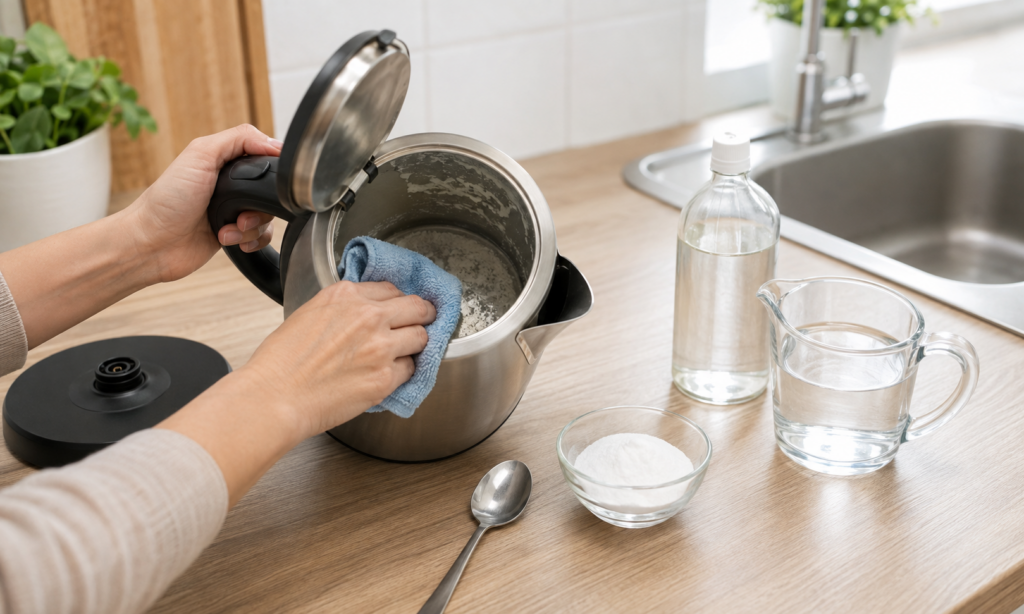
Cleaning Your Kettle After Cooking Rice
Rinse it out while still warm — dried starch is far harder to remove. For stuck residue, fill with warm water, add a spoon of baking soda, let it sit 15 minutes, and wipe with a soft cloth (never a metal scourer). To descale, boil a 1:1 solution of white vinegar and water, let it stand 20 minutes, then rinse twice. If you cook in your kettle regularly, deep-clean it about once a week to stop starch and mineral buildup from affecting the taste of your water.
For more on getting the everyday basics right, see our first-time guide to using an electric kettle — and if yours starts acting up after all this cooking, our symptom-by-symptom repair guide will help.
Frequently Asked Questions
Can you cook rice directly in an electric kettle or do you need a bowl?
Both work. Direct-in-kettle is fastest and fine for white or instant rice, but it risks sticking and burning at the base. A heatproof bowl inside the kettle steams the rice more gently, cleans up easier, and is the better choice for brown or sticky rice.
What is the rice-to-water ratio for cooking rice in a kettle?
Use 1:2 for white rice (half a cup of rice to one cup of water), 1:2.5 for brown rice, and about 1:1 for instant rice. Rinse the rice first to cut surface starch and reduce sticking.
How long does it take to cook rice in an electric kettle?
White rice takes about 12–15 minutes plus a 5-minute rest, brown rice 20–25 minutes, and instant rice 5–8 minutes. Because kettles auto-shut-off when water boils, you’ll usually re-boil three or four times until the water is absorbed.
Can I cook rice in a Pigeon or Prestige electric kettle?
Yes. Their auto shut-off triggers as soon as the water boils, before rice is done, so just re-boil manually a few times and stir between cycles. Use small portions, stay under the MAX line, and don’t leave it unattended.
How do I stop rice from sticking or burning in a kettle?
Rinse the rice first, stir every couple of minutes, never let the kettle run dry between boils, and don’t overfill past the MAX line. For near-zero sticking, use the bowl-in-kettle steaming method so rice never touches the hot element.
Does cooking rice in a kettle damage it or void the warranty?
It can. Food residue and starch are hard on the element and seals, and many manufacturers void the warranty if the kettle is used for cooking. If you plan to cook often, dedicate one inexpensive kettle to food and keep another for drinking water.
Leave a Reply