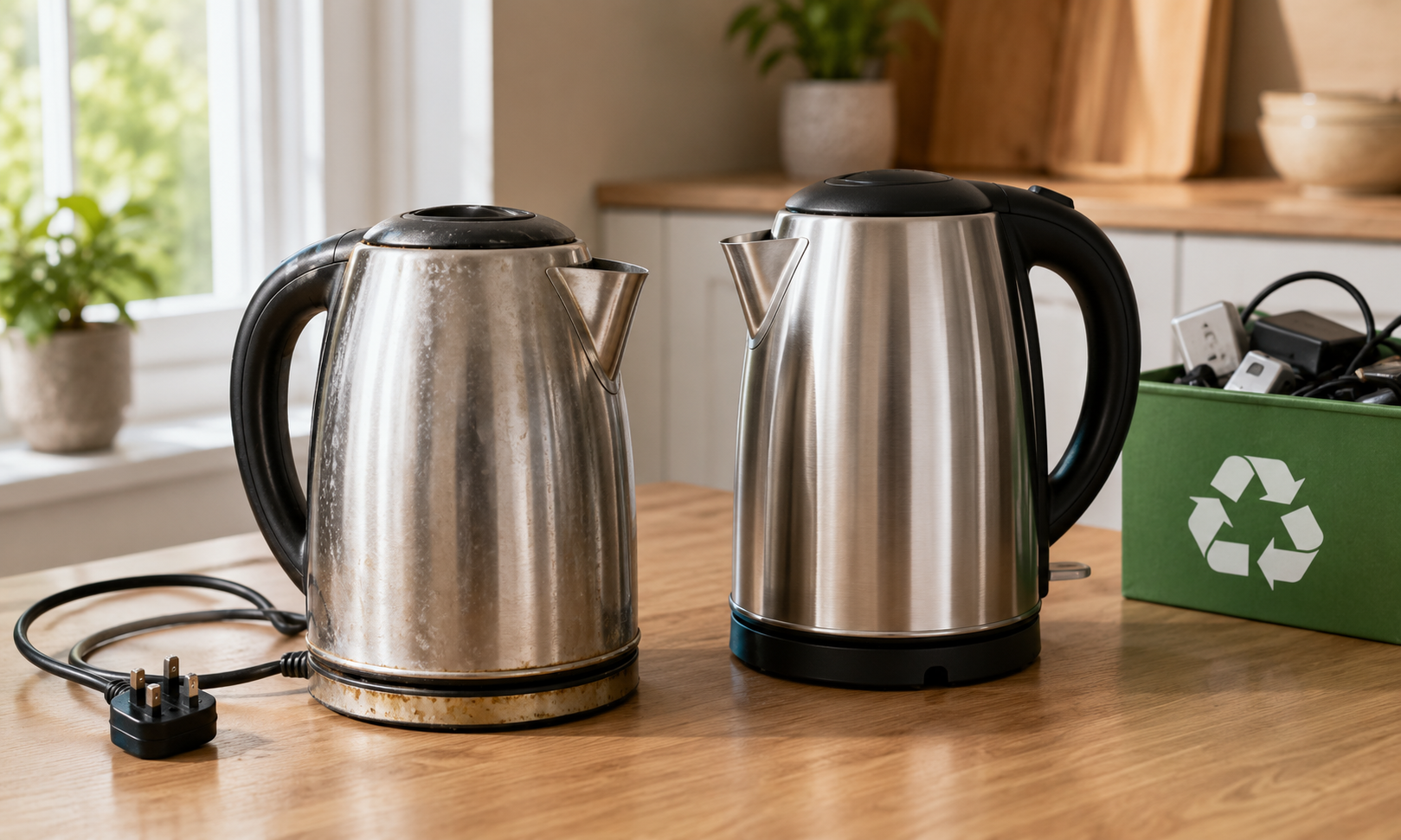
Short answer: most electric kettles last 3 to 5 years, with an industry average of around 4.4 years. Look after a well-built stainless steel model — and stay on top of descaling — and you can push that to 10 years or more. A cheap plastic kettle used hard in a limescale-heavy area might tap out in two.
That’s the headline. But “how long does an electric kettle last” is really three questions in one: how long should it last, how do you know when it’s done, and what do you do with it afterward. We’ll cover all three, because nobody else seems to put them on the same page.
How Long Should an Electric Kettle Last? (Lifespan by Material)
The single biggest predictor of lifespan is what the kettle is made of and how well the heating element is protected. Here’s the realistic range for each type with normal daily use:
| Kettle type | Typical lifespan | Why |
|---|---|---|
| Plastic / budget | 2–4 years | Thinner components, exposed elements, plastic that warps and taints over time |
| Glass | 3–5 years | Scale is easy to spot, but the base seals and lids fail before the glass does |
| Ceramic | 4–7 years | Durable body, but heavy and prone to chips that expose the interior |
| Stainless steel | 5–10+ years | Concealed flat-plate element, sturdy build, resists warping and cracking |
Brand tier matters too. A £15–£20 supermarket kettle is built to a price and usually gives you 2–3 years. A £40–£70 mid-range model from a known appliance brand typically clears 4–6. Premium kettles with a concealed element and a proper metal body are the ones that reach a decade — that’s where the price difference actually earns its keep.
Corded vs cordless makes little difference to the kettle itself, but cordless models add one wear point: the contact between the kettle and its base. Slamming the kettle down or lifting it mid-boil wears that connector faster.
What Affects How Long Your Kettle Lasts
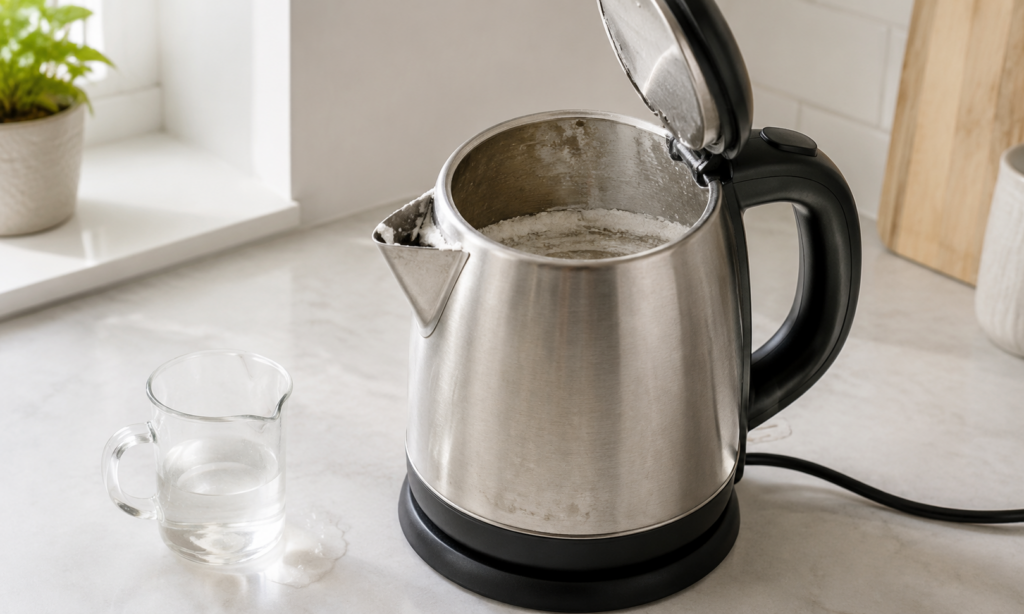
Water hardness is the number one killer. Every boil in a hard-water area leaves a little more limescale on the heating element. That scale insulates the element, forcing it to work harder and run hotter to hit the same temperature — which is exactly how elements burn out early. If you’re in a hard-water region, your kettle’s life is roughly whatever the table above says, minus a year or two, unless you descale.
Usage frequency stacks on top of that. A kettle boiled eight times a day in a busy household ages faster than one used twice on weekends — more thermal cycling, more scale, more wear on the switch.
Then there are the self-inflicted ones. Boiling the kettle dry (or near-dry) is the fastest way to destroy an element. Overfilling past the max line stresses the seals. Using metal utensils inside a plastic or glass kettle scratches the surface and gives scale and mold more to cling to. For the full routine, see our guide to using an electric kettle the right way.
8 Signs It’s Time to Replace Your Electric Kettle
Some of these are annoyances. Some are safety issues. We’ve flagged which is which.
- It boils noticeably slower than it used to. Usually scale on the element. Try a full descale first — if speed doesn’t recover, the element is degrading.
- The auto shut-off stops working. If it doesn’t click off when the water boils, replace it. A kettle that won’t stop boiling is a fire and steam-burn risk.
- The water tastes metallic or plasticky even after cleaning. Once a taint won’t descale out, the interior has broken down.
- Cloudy or gritty water after boiling. Flaking scale or degrading material ending up in your cup.
- Cracks, warping, or melted plastic near the base. Heat damage that will only get worse.
- Loud popping, grinding, or rattling beyond the normal rumble of a boil.
- Frayed cord, sparking, browning at the plug, or it trips your breaker/RCD. Stop using it immediately — this is not a “finish the week” situation.
- Limescale that won’t clear even after a thorough descale. The scale has bonded to the element permanently.
If the problem is mechanical rather than degradation-based, it may be fixable — our symptom-by-symptom kettle repair guide walks through what’s worth trying before you give up on it.
Safety First: When “It Still Boils” Isn’t the Same as “It’s Still Safe”
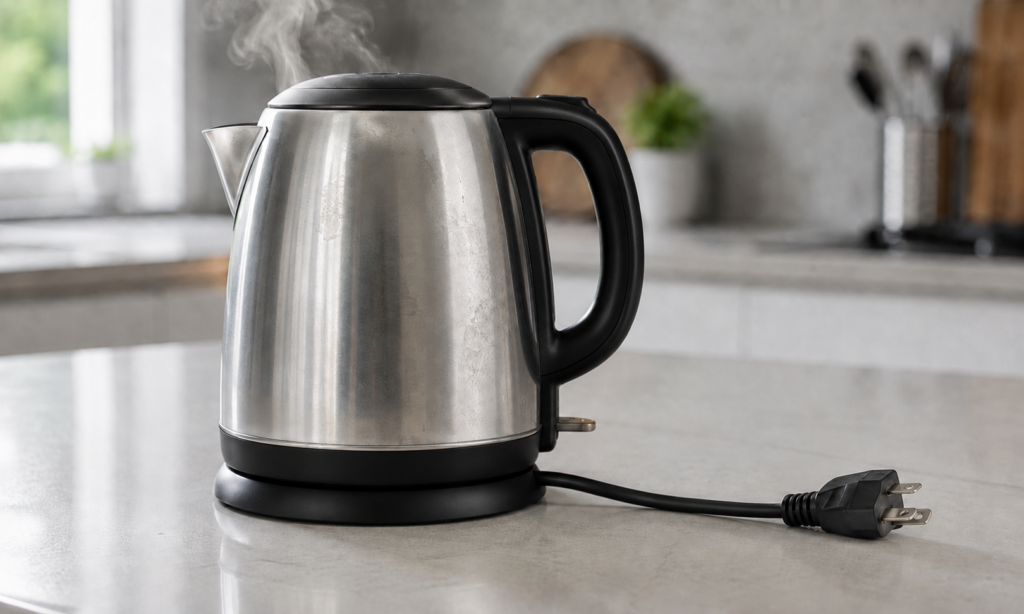
This is the part most lifespan articles skip. An old kettle can keep boiling water long after it stops being safe. The two failure modes that matter:
Electrical. Cords fray internally where they flex, plugs loosen, and the moisture-heat cycle degrades insulation. A kettle handles mains voltage right next to boiling water — a compromised cord or cracked element is a genuine shock and fire hazard, not a cosmetic one.
Mechanical. A failed auto shut-off means boil-dry risk and scalding steam. A cracked base seal can let water reach the electrics.
Rule of thumb: performance problems (slow boil, taste) can wait for a convenient replacement. Anything electrical — sparking, tripping, a hot or discolored plug, a frayed cord — means unplug it and stop using it today.
How to Make Your Kettle Last Longer
Most early deaths are preventable. The big three:
- Descale on a schedule that matches your water. Monthly in hard-water areas, every three months in soft-water areas. White vinegar or citric acid, a boil, a soak, a rinse. This single habit is worth years.
- Never boil dry, and don’t overfill. Keep the water between the min and max lines.
- Empty it after use. Standing water breeds scale and, over time, mold around the lid and seals. Leave the lid open to dry.
If you’re wondering whether all this scale is affecting your water quality, we cover that in is water boiled in an electric kettle safe.
Repair or Replace? A Quick Cost Check
The math is usually simple. A replacement element or a new cord assembly, plus your time, often costs more than half the price of a new kettle — and on a budget model, more than the whole thing. Repair makes sense when:
- It’s a premium kettle and only the cord or a single serviceable part has failed.
- It’s still under warranty — check before you spend a penny; many brands run 2–3 years.
Otherwise, think in cost-per-year. A £50 kettle that lasts five years costs £10 a year. A £20 one that dies in two costs the same £10 a year but sends more to landfill and gives you a worse experience along the way. When you’re ready to buy, our electric kettle buying guide covers what actually lasts.
How to Dispose of or Recycle an Old Electric Kettle
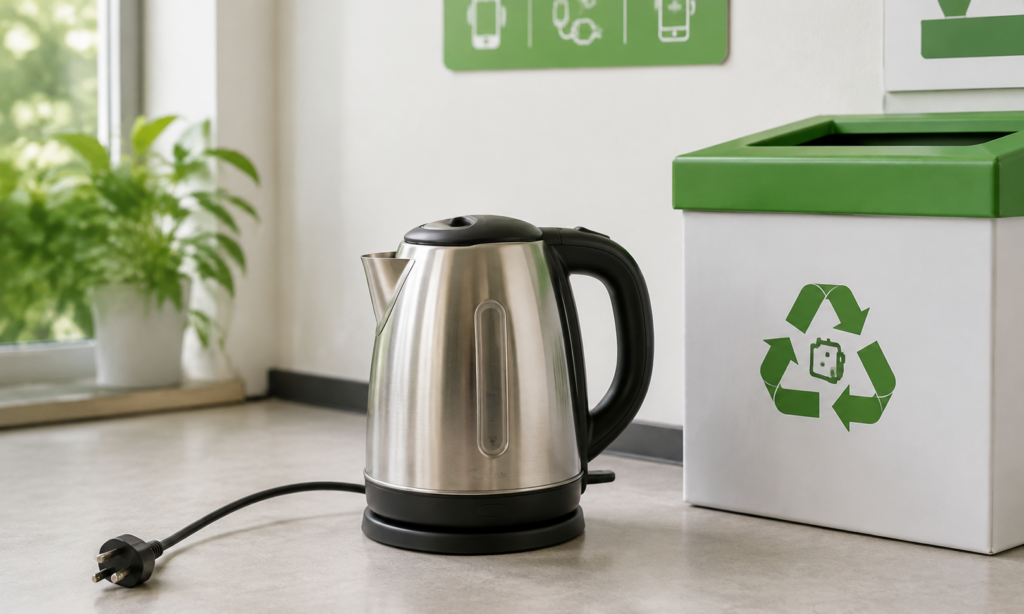
Here’s the rule almost nobody states plainly: a broken electric kettle should not go in your regular household bin. It’s electrical waste (WEEE in the UK and EU; e-waste under EPA guidance in the US), and it contains a heating element and wiring that recycling systems are set up to recover. In many places, binning it is against local rules.
Use this quick decision tree:
If it still works:
- Donate it to a charity shop, thrift store, or reuse organisation.
- Resell or give it away locally.
If it’s broken:
- Retailer take-back. Buying a replacement? Most large electrical retailers must take your old one back — sometimes in store, sometimes on delivery of the new one. Ask at checkout.
- Local recycling centre / household waste site. Nearly all have a dedicated small-electricals or WEEE bin. Free to drop off.
- Manufacturer take-back. Some brands run their own return or recycling schemes — check the website.
- Municipal special collection. Many councils run kerbside small-electricals collections or periodic collection days.
Before you recycle it, don’t cut the cord off — kettles go into WEEE recycling whole, plug and all. Do remove any detachable parts a scheme asks you to separate (a limescale filter, a loose lid), and empty out any water. In the US, Earth911 is the fastest way to find a nearby e-waste drop-off; in the UK, your council website or the Recycle Now locator points you to the closest one.
Bottom Line: Should You Replace Your Kettle Today?
Expect 3–5 years from an average kettle and up to 10 from a well-kept premium one. If yours is just slow or tastes off, descale it first — you may buy another year. If it’s sparking, tripping the breaker, or won’t switch off, replace it now and recycle the old one through a proper e-waste route, not the bin. That’s the whole decision, start to finish.
Frequently Asked Questions
How long should an electric kettle last?
A decent electric kettle should last 3 to 5 years with normal daily use. Premium stainless steel models with a concealed element can last 10 years or more if you descale them regularly and never boil them dry. Budget plastic kettles often only manage 2 to 4 years.
What is the average lifespan of an electric kettle?
The commonly cited average is about 4.4 years. That figure blends everything from cheap plastic kettles that fail early to well-maintained steel ones that run for a decade, so where your kettle lands depends mainly on build quality, your water hardness, and how often you descale.
How do I know when my kettle is going bad?
Watch for slower boiling that doesn’t improve after descaling, a metallic or plasticky taste, cloudy water, cracks or warping near the base, a shut-off that won’t click off, and any electrical warning sign like a frayed cord, sparking, or a tripped breaker. Electrical faults mean stop using it immediately.
Does hard water really shorten a kettle’s life?
Yes, significantly. Hard water leaves limescale on the heating element after every boil, which forces the element to run hotter and burn out sooner. In hard-water areas, descaling monthly is the single most effective thing you can do to extend your kettle’s lifespan.
Can an electric kettle be repaired instead of replaced?
Sometimes. If it’s a premium kettle and only the cord or a serviceable part has failed — or if it’s still under warranty — repair can be worth it. For most budget and mid-range kettles, a new element plus your time costs more than a replacement, so it’s usually not economical.
How do you dispose of an old or broken electric kettle?
Don’t put it in your regular bin — it’s electrical (WEEE/e-waste). If it works, donate or resell it. If it’s broken, use retailer take-back when buying a new one, drop it at a local recycling centre’s small-electricals bin, use a manufacturer take-back scheme, or a council collection. Recycle it whole; don’t cut the cord off.
Is it dangerous to keep using an old kettle?
It can be. A kettle that still boils water isn’t necessarily safe — aging cords, worn insulation, and cracked elements create shock and fire risks, and a failed auto shut-off can boil dry or scald. Performance issues can wait, but any electrical warning sign means stop using it right away.
Leave a Reply