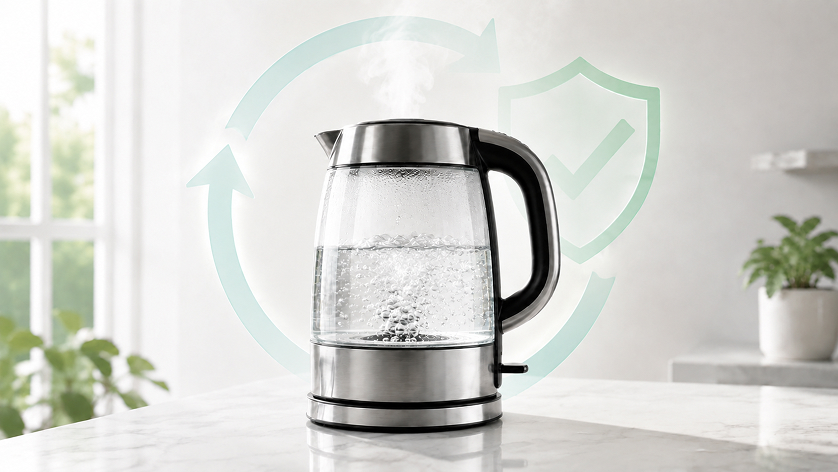
The Short Answer: Is Water Boiled in an Electric Kettle Safe?
Yes. For the vast majority of people, water boiled in an electric kettle is safe to drink. The boiling process itself is one of the oldest and most reliable ways to make water safer, it kills the pathogens that make you sick.
The real question isn’t the boiling. It’s what your kettle is made of and how you use it. A cheap, degraded plastic kettle you never clean is a different story than a quality stainless steel or glass one you empty after each use.
Bottom line up front: Boiling kills bacteria, viruses, and parasites. It does not remove chemicals, heavy metals, minerals, or microplastics. So “safe” depends on your water source and your kettle, not on the kettle being electric.
Does Boiling Water Actually Kill Bacteria and Germs?
This is where electric kettles genuinely shine. Bringing water to a rolling boil, 100°C (212°F), kills or inactivates virtually all disease-causing organisms: bacteria like E. coli and Salmonella, viruses such as hepatitis A and norovirus, and parasites like Giardia and Cryptosporidium.
The CDC’s own guidance is blunt about it: bringing water to a full rolling boil for one minute (three minutes above 6,500 feet in elevation) makes it microbiologically safe to drink. Most pathogens die well before the boiling point, but a full boil removes any guesswork. Since electric kettles automatically shut off at a rolling boil, they hit that threshold every single time — no watching the pot, no undershooting.
Does an Electric Kettle Sterilize or Purify Water?
No — and this distinction matters. Boiling disinfects (kills living organisms). It does not purify. It won’t remove:
- Heavy metals like lead or arsenic
- Nitrates, chlorine, or fluoride
- Dissolved minerals (the stuff that leaves limescale)
- Microplastics
If your tap water is biologically contaminated, boiling fixes it. If it’s chemically contaminated, boiling can actually concentrate some contaminants slightly as steam escapes. For chemical problems, you need a filter, not a kettle.
Plastic vs Glass vs Stainless Steel: Which Kettle Material Is Safest?
This is the part almost every article skips or fudges. The material touching your near-boiling water is the single biggest factor in whether “electric kettle water is good for health” or not. Here’s the honest comparison:
| Material | Leaching risk | Taste impact | Durability | Verdict |
|---|---|---|---|---|
| Stainless steel | Very low (food-grade 304) | Neutral | Excellent | Safest all-round |
| Borosilicate glass | None (inert) | None — purest taste | Fragile | Safest for taste |
| BPA-free plastic | Low if certified & intact | Slight when new | Good | Fine, with care |
| Cheap/old plastic | Higher (BPA, microplastics) | Plastic-y | Degrades | Replace it |
Plastic: The worry here is real but often overstated. BPA (bisphenol A) and phthalates can leach from certain plastics under heat, and a 2019 study in Environmental Science & Technology found that heating drives up microplastic release. The catch: it only becomes a meaningful concern with non-BPA-free, degraded, scratched, or discolored plastic. A quality BPA-free kettle in good condition leaches negligibly. A ten-year-old bargain kettle with a cloudy, flaking interior is worth replacing.
Glass (borosilicate): Chemically inert, nothing leaches, ever. It gives the cleanest taste and lets you see limescale building up. The only downside is that it can crack if knocked or thermally shocked.
Stainless steel: Our default recommendation for most people. Food-grade 304 steel doesn’t leach under normal use and takes a beating for years. One caveat: avoid ultra-cheap, no-name units, where lower-grade metals can shed trace nickel or chromium. Look for a stated “304” or “18/8” food-grade spec.
Is the Hamilton Beach Electric Kettle BPA-Free? Is Bodum?
These are two of the most-searched brand questions, so let’s answer them directly. Hamilton Beach states that its electric kettles are BPA-free, and several models use glass or stainless steel construction anyway. Bodum also markets its electric kettles as BPA-free, with popular glass and stainless options. As always, confirm the spec on the exact model you’re buying, brands rotate designs, and the listing or manual will say. When in doubt, a glass or all-steel model sidesteps the question entirely.
For a full material-by-material rundown and specific picks, see our guide on where to buy an electric kettle.
The Cancer Question: Can an Electric Kettle Cause Cancer?
Let’s be direct: there is no credible evidence that boiling water in an electric kettle causes cancer. The viral claims circulating online conflate two separate things, the harmless act of heating water, and the theoretical risk from chemicals in poor-quality materials.
Boiling water does not create carcinogens. What could pose a tiny risk is prolonged high-heat contact with uncertified plastics (BPA/phthalates) or cheap uncoated metals (heavy metals) over years of use. Even then, regulators like the FDA and EFSA have set exposure limits, and the amounts leaching from a certified, intact kettle fall far below levels of concern. The WHO classifies the risk from properly treated boiled water as negligible.
So the practical takeaway isn’t “kettles cause cancer.” It’s: use a certified, BPA-free or metal/glass kettle in good condition, and there’s no meaningful cancer risk to worry about.
Is It Okay to Leave Water Sitting in the Kettle?
It’s not dangerous, but it’s not ideal either. Water left standing overnight or for days develops a flat, stale taste as dissolved gases escape, accelerates limescale buildup, and gives any lingering minerals or biofilm a chance to sit. In uncoated aluminum kettles specifically, standing water can react with the metal over time.
None of this will typically make you sick if you reboil it. But there’s an easy habit that avoids the whole issue:
- Empty the kettle after each use and leave the lid open to dry
- Refill with fresh water rather than topping up old water
- Descale every few weeks with a vinegar-and-water solution (and rinse thoroughly afterward, vinegar residue is harmless but tastes off)
Think of standing water as a taste-and-hygiene issue, not a safety emergency. For more day-to-day habits, our first-time guide to using an electric kettle covers the routine.
Is It Safe to Leave an Electric Kettle Plugged In?
On a modern, certified kettle, yes, leaving it plugged in draws essentially no standby power and poses very little risk. Electric kettles have no “on” state until you flip the switch, and quality units have automatic shut-off plus boil-dry protection.
The real fire and shock risks come from specific failure points, not from the plug itself:
- Frayed or worn power cords
- A wet or damp base and connector
- Cheap, uncertified units with unreliable auto shut-off
Sensible habits: unplug it overnight or when you travel, keep the base dry, inspect the cord periodically, and buy a kettle carrying a recognized safety mark (UL or ETL in North America, CE/UKCA in Europe). Understanding how an electric kettle actually works makes these safeguards easier to appreciate.
Is Reboiling Water in a Kettle Safe?
For most people, yes. The popular fear that reboiling turns water toxic is largely a myth. The nuance: each boil evaporates a little water, which very slightly concentrates whatever was already dissolved — including nitrates, fluoride, or arsenic if your tap water contains them. On clean municipal water, this is a non-issue.
The sensible rule: if your local tap water is high-quality, reboil without worry. If you’re in an area with known contamination, start with fresh water each time and consider filtering first.
Bottom Line: How to Make Sure Your Kettle Water Is Safe
Is heating water in an electric kettle safe? For nearly everyone, with a decent kettle, absolutely, and boiling makes questionable water safer, not more dangerous. Run through this quick checklist and you’ve covered every real risk:
- Choose stainless steel, glass, or certified BPA-free plastic
- Look for a safety mark (UL/ETL/CE) and a food-grade metal spec
- Empty and dry the kettle after use, don’t let water sit for days
- Descale regularly and rinse well
- Replace old, scratched, or discolored plastic kettles
- Unplug when you’re away, and check the cord and base
Do those things and the answer to “is boiling water in an electric kettle safe to drink” is a confident yes. The kettle isn’t the risk, cheap materials and neglected habits are, and both are easy to avoid. Ready to upgrade to a safer model? Start with our complete electric kettle buying guide.
Frequently Asked Questions
Is water boiled in an electric kettle safe to drink?
Yes. Boiling kills bacteria, viruses, and parasites, making water microbiologically safe. Just use a quality stainless steel, glass, or certified BPA-free kettle, and keep it clean, the material and your habits matter more than the boiling itself.
Can an electric kettle cause cancer?
There is no credible evidence that boiling water in an electric kettle causes cancer. Boiling doesn’t create carcinogens. Any tiny theoretical risk comes from cheap, degraded, or uncertified materials leaching chemicals, which a good BPA-free, glass, or steel kettle avoids entirely.
Does boiling water in an electric kettle kill bacteria?
Yes. A full rolling boil at 100°C (212°F) kills or inactivates virtually all disease-causing bacteria, viruses, and parasites. Since electric kettles auto-shut-off at boiling point, they reliably hit that threshold. Note that boiling disinfects but doesn’t remove chemicals, metals, or microplastics.
Is a plastic electric kettle safe, or should I switch to glass or steel?
A certified BPA-free plastic kettle in good condition is safe. The risk rises with cheap, scratched, or degraded plastic that can leach BPA or microplastics under heat. Stainless steel and borosilicate glass are inert and don’t leach, making them the safest long-term choices.
Is it okay to leave water sitting in an electric kettle?
It’s not dangerous, but it’s not ideal. Standing water tastes stale, speeds up limescale, and can pick up minor buildup. Empty the kettle after each use, let it air-dry, and refill with fresh water rather than reboiling day-old water.
Is it safe to leave an electric kettle plugged in?
On a modern, certified kettle, yes, standby draw is negligible and there’s no live heating until you switch it on. Real risks come from worn cords, damp bases, and uncertified units. Unplug when traveling, keep the base dry, and inspect the cord regularly.
Leave a Reply