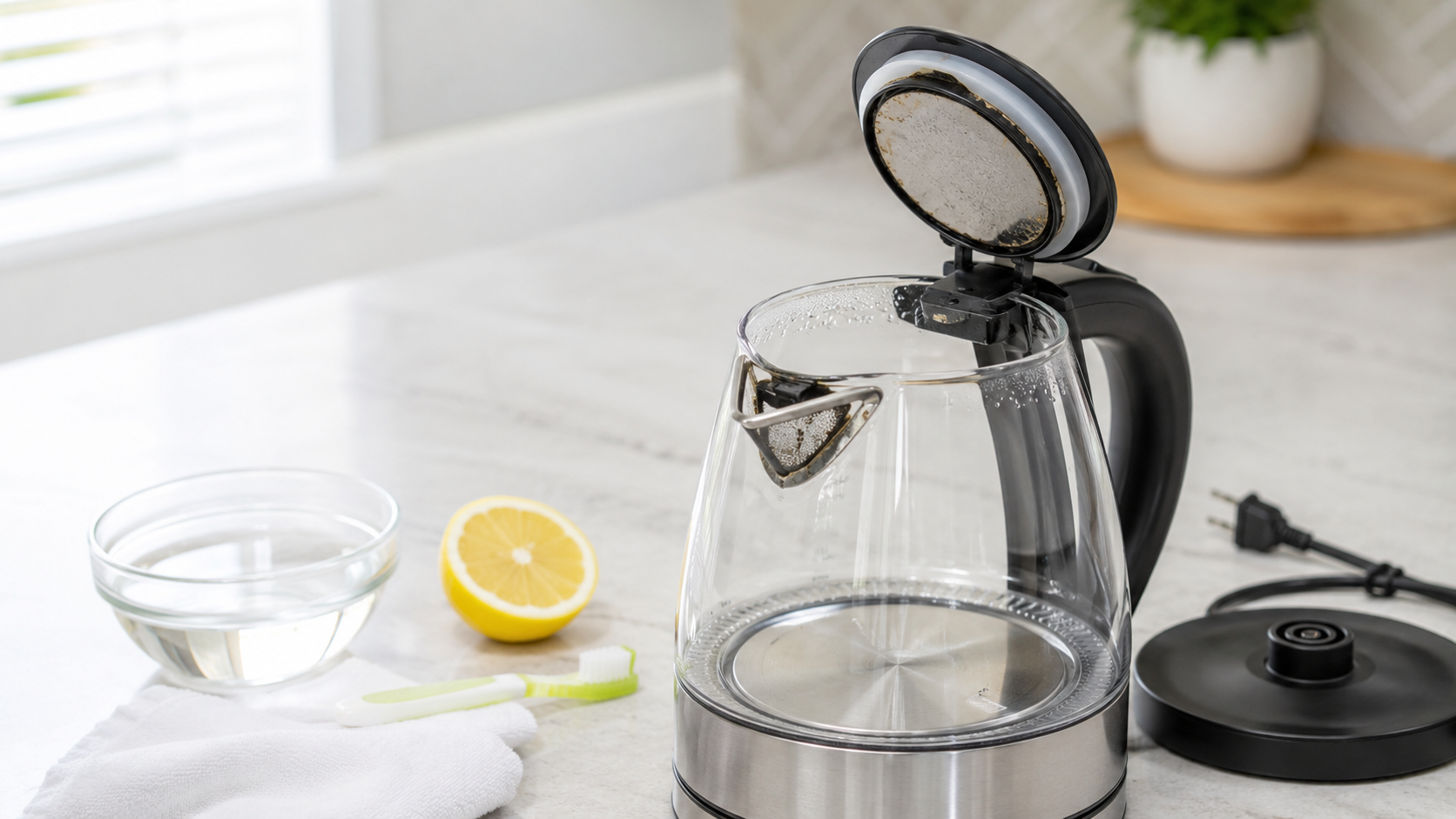
Short answer: yes, mold can absolutely grow in an electric kettle. And it’s not because you’re doing anything gross — it’s because a kettle is a warm, damp, enclosed box with a rubber seal and a few residue traps, which is close to a perfect home for mold spores.
Most guides tell you “boil some vinegar” and leave it there. That misses the point. The mold in a kettle almost never lives in the open water reservoir where you’d notice it — it hides in the parts you never look at, and boiling water doesn’t sterilize those parts. Let’s fix that properly, and do it without wrecking the electrical base or the heating element.
Can Mold Really Grow in an Electric Kettle?
Yes. Mold needs three things: moisture, warmth, and something organic to feed on. An electric kettle hands it all three. Water left standing after a boil keeps surfaces damp. The residual heat keeps things warm for hours. And the thin film left behind by tea, coffee, and even the trace organics in tap water gives spores something to eat.
Here’s the part nobody explains: boiling doesn’t prevent regrowth. When you boil, you kill the spores that happen to be in the water at that moment. But the second the kettle cools, airborne spores land on the damp gasket, the spout, and the underside of the lid — surfaces the boil never sterilized because they’re above the waterline or shielded from full heat. Two or three days of “boil, cool, sit damp, repeat” is all it takes for a colony to establish. So no, boiling every day does not keep a kettle mold-free.
Where Mold Actually Hides in an Electric Kettle
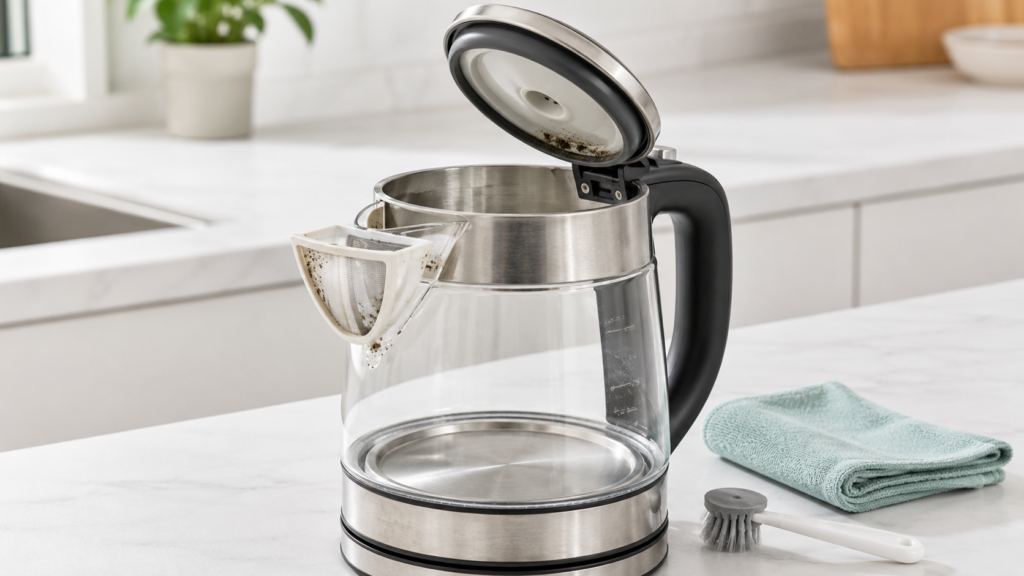
This is the gap in almost every article you’ll find. “Clean inside the kettle” is useless advice when the mold isn’t in the obvious spot. Check these, in order of likelihood:
- The rubber lid gasket or seal. The single most common hiding place. It stays damp, it’s shaded, and it’s textured — mold’s favorite terrain. Peel it back and look underneath.
- The underside of the lid and the steam vent. Condensation collects here every time you boil, then never fully dries.
- The spout opening and the mesh pour filter. That little limescale filter in the spout traps organic film and stays wet. Pop it out if it’s removable.
- Crevices around the base and pouring rim. The seam where the body meets the base collects splashes. Important: this is near the electrical unit — clean it with a barely-damp cloth, never by submerging.
If you’ve got a plastic or stainless kettle, mold can be harder to spot than in a glass one. In glass kettles you’ll see it early; in opaque models you often smell it before you see it.
Mold vs. Limescale: How to Tell the Difference
Searchers constantly ask, “Is this mold or just mineral buildup?” It matters, because the fixes overlap but the risks don’t. Here’s a quick identification test:
| Clue | Limescale | Mold |
|---|---|---|
| Color | White, cream, chalky | Black, green, orange, or pink |
| Texture | Hard, gritty, crusty | Fuzzy, slimy, or spotty |
| Location | On the heating element and base, at the waterline | On the seal, lid, and spout — the damp, shaded parts |
| Smell | None | Musty, damp, earthy |
| Wipes off? | No — needs acid to dissolve | Smears when wet, leaves a stain |
Rule of thumb: hard white crust on the metal element is limescale; fuzzy dark specks near the rubber seal are mold. If you’re dealing with reddish or brown staining on the metal, that may be rust instead — see our guide on how to remove rust from an electric kettle.
Signs You Have Mold in Your Kettle
- A musty or damp smell coming from the spout, even after rinsing.
- Tea or coffee that tastes faintly off or “earthy.”
- Dark spots or fuzzy patches near the lid, seal, or spout.
- Discoloration that smears rather than wiping clean with plain water.
A funny taste in your brew is often the first warning — the water reads fine, but it picks up spores on the way out through a moldy spout.

Is It Safe to Drink Water From a Moldy Kettle?
For a healthy adult, a small amount of water from a lightly moldy kettle is unlikely to make you seriously ill — but we don’t recommend it, and here’s the honest nuance most pages skip.
Boiling kills live mold, but it does not neutralize the allergens and some toxins mold leaves behind once it has colonized a surface. So “I boil it, so it’s fine” isn’t quite true. The real risk depends on who’s drinking it:
- Higher risk: people with asthma, mold allergies, respiratory conditions, or a compromised immune system. For them, stop using the kettle and clean it before the next brew.
- Lower risk: healthy adults, occasional exposure, small visible amounts. Still worth cleaning promptly, but not a medical emergency.
If you’re wondering about water safety more broadly, we cover it in is water boiled in an electric kettle safe. The bottom line on mold: visible growth means clean it now, don’t drink around it.

How to Clean Mold Out of an Electric Kettle Safely
This is where electric kettles differ from stovetop ones, and where generic advice gets dangerous. Follow this method to get mold out of an electric kettle without harming the wiring or the element.
- Unplug it and let it cool completely. Never clean a warm or connected kettle.
- Vinegar-water soak. Fill to about half with a 1:1 mix of white vinegar and water. Bring it to a boil, switch off, and let it sit for 20–30 minutes. Vinegar’s acidity kills mold and loosens limescale at the same time.
- Pour out and scrub gently. Use a soft sponge or a bottle brush. For stubborn spots, a baking soda paste (baking soda + a little water) works without scratching.
- Citric acid alternative. If you dislike the vinegar smell, dissolve 1–2 tablespoons of citric acid in a full kettle of water, boil, and let sit. It’s odor-free and food-safe.
- Rinse thoroughly — twice. Fill, boil, discard. Any cleaning taste left behind ends up in your tea.
What NOT to do, ever:
- Never submerge the base or the electrical unit. Wipe the exterior with a damp cloth only, and keep liquid away from the plug contacts.
- Never use steel wool or abrasive pads on the heating element — scratches strip protective coatings and give future mold and scale more surface to cling to.
- Skip bleach if you can. If you must use it for a bad case, dilute heavily, rinse at least three times, and boil-and-discard twice afterward. Bleach residue is not something you want in a drink.
Don’t Forget the Lid Seal and Spout
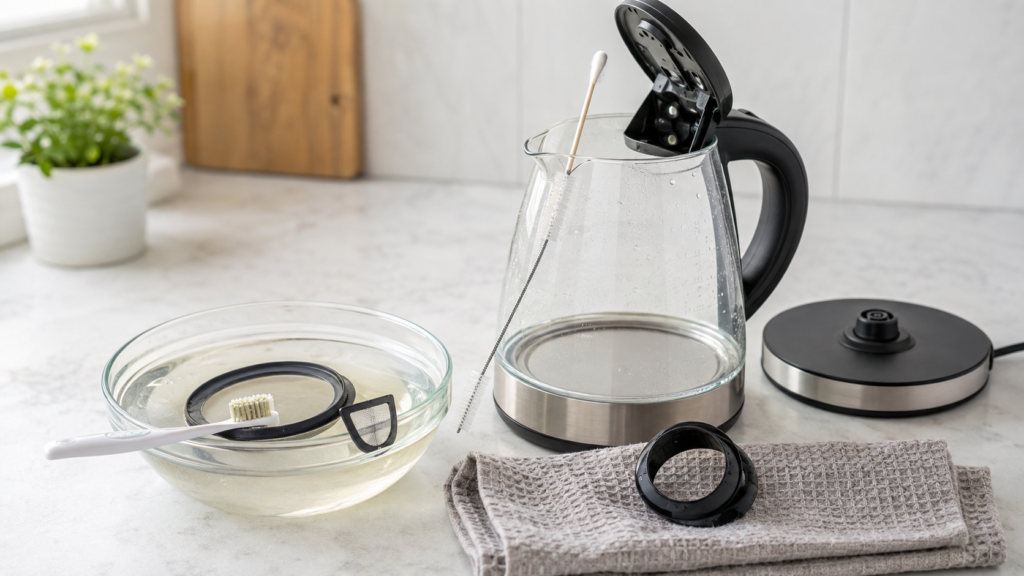
This is where other guides stop short — and it’s exactly where the mold lives. A perfectly clean reservoir means nothing if the gasket is still furry.
- If your kettle has a detachable gasket or filter, remove it, soak it in warm vinegar water for 10 minutes, and scrub with an old toothbrush.
- Use a cotton swab or narrow bottle brush to get into the spout and the steam vent — the two spots a sponge can’t reach.
- Let everything air-dry fully before reassembling. Trapping moisture under a reattached seal just restarts the cycle.
How Often Should You Clean Your Electric Kettle to Prevent Mold?
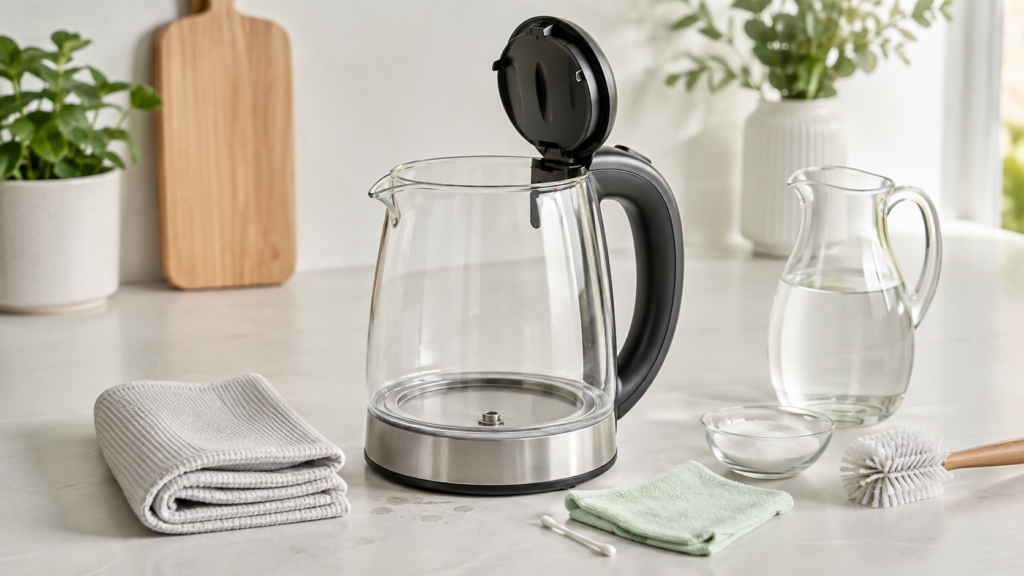
Frequency should match how you use it and your water:
- Daily: empty the kettle and leave the lid open to air-dry after your last use.
- Weekly: wipe the seal and spout with a damp cloth.
- Monthly (biweekly in hard-water areas): a full vinegar or citric-acid descale-and-clean.
Hard water and humid kitchens speed everything up — buildup feeds mold, so descaling more often genuinely helps. For the complete step-by-step routine, see how to use an electric kettle the right way.
7 Habits That Keep Mold From Coming Back
- Empty it after boiling. Standing water is the number-one cause — don’t leave it overnight.
- Leave the lid open or ajar so the interior and seal dry fully.
- Store it somewhere ventilated, not shut in a cupboard while still damp.
- Use filtered water to cut down on the minerals and organics mold feeds on.
- Descale on a schedule instead of waiting for buildup.
- Dry the gasket separately with a cloth — it’s the slowest part to air-dry.
- Never leave tea bags or coffee residue sitting in the reservoir.
Do those seven things and the question stops being “how do I get rid of mold in my electric kettle” and becomes “why does my kettle never get moldy anymore.” That’s the goal.
Frequently Asked Questions
Can mold grow in a kettle if you boil it every day?
Yes. Boiling only kills spores in the water at that moment — it doesn’t sterilize the lid seal, spout, or vent, which stay damp after the kettle cools. Daily boiling can still leave those shaded parts colonized within a few days.
Is it safe to drink water from a kettle with mold?
For healthy adults, a small amount is unlikely to cause serious harm, but we don’t recommend it. Boiling doesn’t neutralize the allergens mold leaves behind. It’s riskier for people with asthma, mold allergies, or weakened immune systems — clean the kettle before your next brew.
How do I know if it’s mold or just limescale?
Limescale is white, hard, and gritty, and forms on the heating element at the waterline. Mold is black, green, orange, or pink, feels fuzzy or slimy, sits near the rubber seal and spout, and smells musty. Limescale needs acid to dissolve; mold smears when wet.
Does vinegar kill mold in a kettle?
Yes. A 1:1 white vinegar and water solution, boiled and left to sit for 20–30 minutes, kills mold and dissolves limescale at once. Follow with a soft scrub of the seal and spout, then rinse and boil-and-discard twice before use.
Can mold grow in a stainless steel kettle?
Yes. Stainless steel resists rust but doesn’t stop mold, which grows on residue and the rubber seal rather than the metal itself. It’s just harder to spot than in a glass kettle, so check the lid, gasket, and spout regularly.
Is it OK to use bleach to clean mold out of an electric kettle?
It works but it’s a last resort. Dilute it heavily, keep it away from the electrical base, and rinse at least three times plus two boil-and-discard cycles afterward. Vinegar or citric acid is safer for something you drink from and usually just as effective.
Leave a Reply