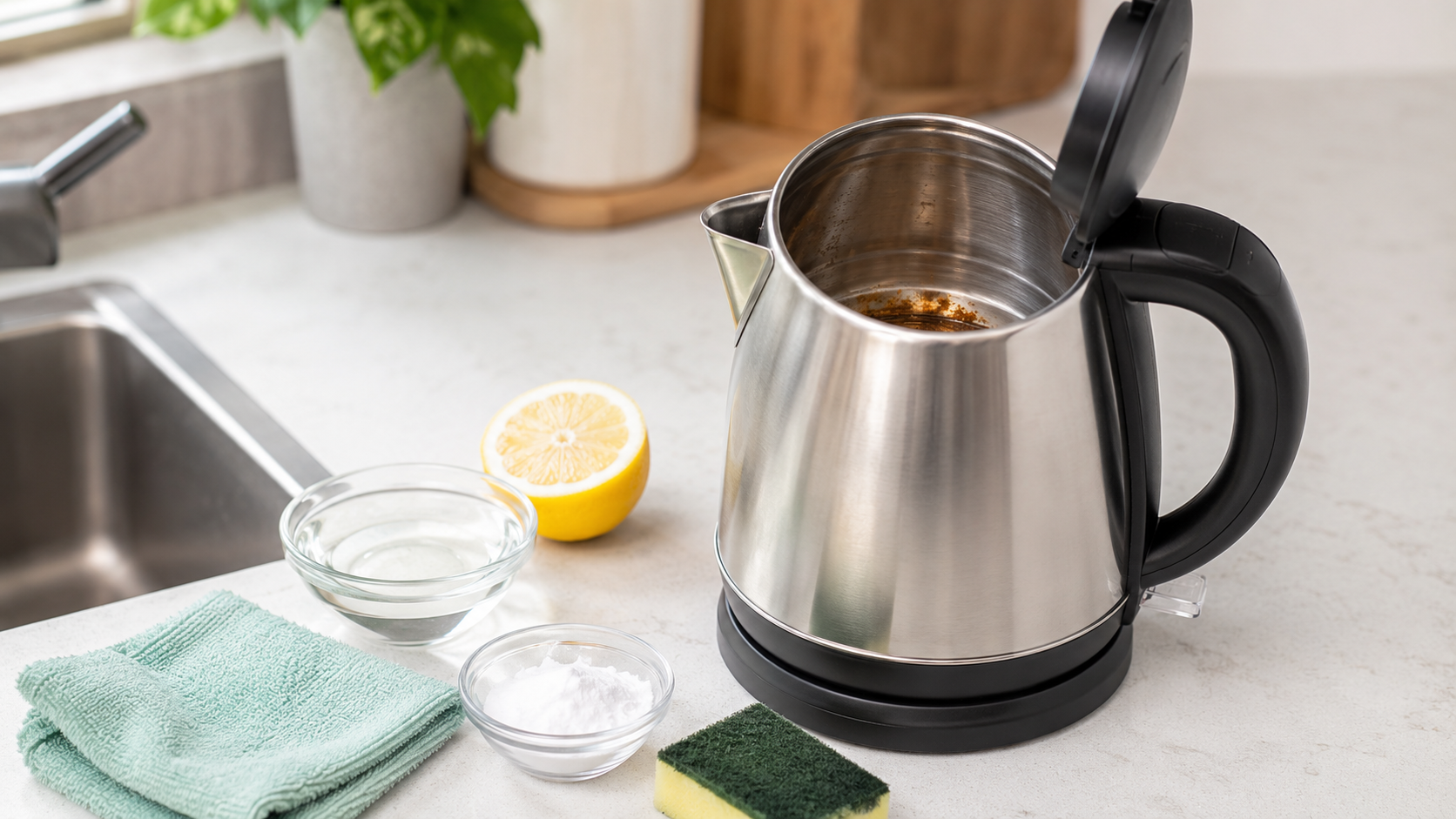
Most rust guides you’ll find were written for stovetop kettles you can dunk in a sink. An electric kettle is a different animal: it has a sealed electrical base, an exposed heating element, and a power connector that must never get wet. Clean it the wrong way and you don’t just fail to remove the rust — you can kill the kettle.
Here’s how to do it properly, plus the one thing the vinegar listicles never tell you: some rust means clean it, and some rust means stop using the kettle today.
Quick Answer: How to Remove Rust From an Electric Kettle
- Unplug the kettle and let it cool completely.
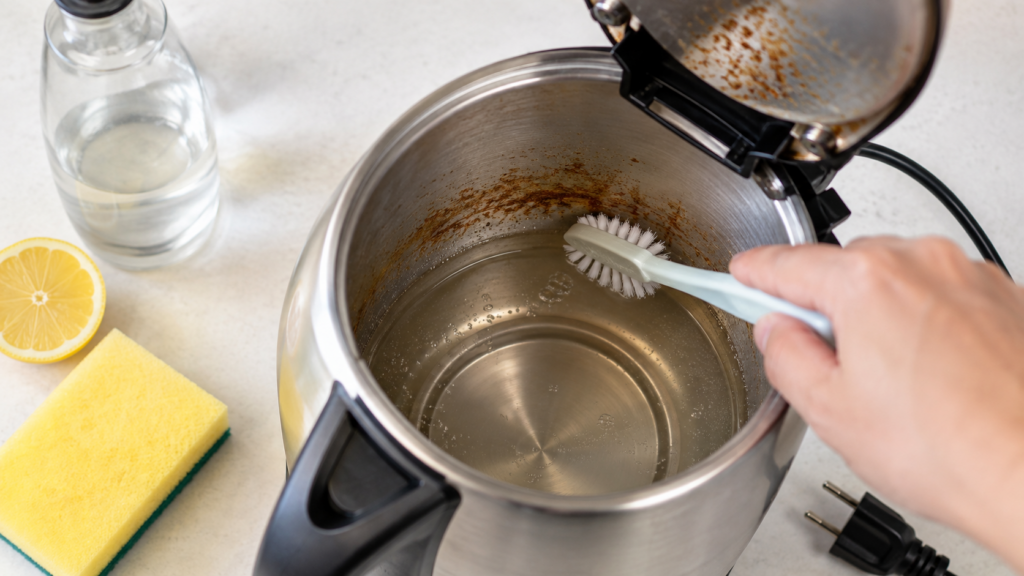
- Fill it with equal parts water and white vinegar (or lemon juice) up to just above the rust line.
- Boil once, switch off, and let it soak 30 to 60 minutes.
- Tip it out and scrub gently with a soft-bristle brush or sponge — never steel wool on a coated interior.
- Rinse three to five times, then boil a batch of plain water and discard it before normal use.
This handles surface rust on the interior wall or lid. If rust has reached the exposed heating coil, skip the scrubbing — read the safety section below first, because that’s a replace decision, not a cleaning one.
Why Does an Electric Kettle Rust in the First Place?
Rust is iron plus oxygen plus moisture. Your kettle supplies all three: the heating element and some interior parts contain iron, and water sits against them every day. Three things speed it up.
- Trapped moisture. Condensation collects under the lid and in the spout after every boil. If you close the lid on a warm, damp kettle, that water has nowhere to go.
- Hard water. Mineral deposits (limescale) build a rough, porous layer that holds moisture against the metal and seeds corrosion underneath.
- Standing water. Leaving water in the kettle overnight is the single most common cause of rust spots we see.
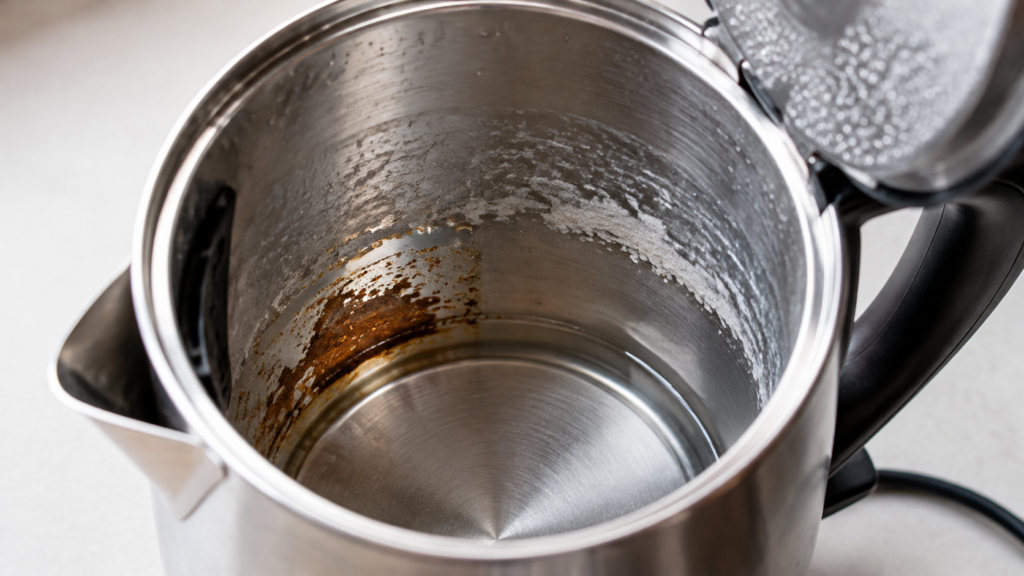
First, make sure it’s actually rust. People confuse two very different things. True rust is reddish-brown, flaky, and sits in patches. Limescale is white, gray, or chalky and crusty, usually around the waterline and on the element. Limescale is harmless and descales away easily. If what you’re seeing is white or gray, you don’t have a rust problem — you have a descaling job, and our guide on whether kettle water is safe covers why that mineral scale is nothing to worry about.
Is Rust in an Electric Kettle Dangerous?
Let’s give a straight answer, because the other guides won’t.
Iron oxide — actual rust — is not toxic in the small amounts you’d ever ingest from a kettle. Your body handles trace iron fine. So a few light surface spots that you clean off are not a health emergency.
But “not toxic” isn’t the whole story. Here’s the honest verdict:
- Light surface rust on the interior wall or lid: clean it and keep using the kettle. Low risk.
- Rust that flakes into the water no matter how often you clean: stop. Flaking rust means the protective surface is failing, and you’ll be drinking bits of it.
- Rust on the visible heating coil or element itself: stop using it and replace the kettle. This isn’t a taste or health-of-the-water issue — it’s an electrical one. Corrosion on or around the element can compromise the seal between the water and the wiring, and that’s where water-and-electricity risk lives.
Rule of thumb: if you can wipe the rust off cosmetic surfaces, clean it. If the rust is part of the heating element, buy a new kettle.
What You’ll Need
- White vinegar or lemon juice (either works — both are mild acids)
- Baking soda for stubborn spots
- A soft cloth or non-scratch sponge
- A soft-bristle brush (an old toothbrush is perfect)
- Dish soap and rubber gloves
Note what’s not on the list: steel wool and wire brushes. They’ll strip the finish off a stainless interior and shred a nonstick or enamel-coated one, creating fresh raw metal for rust to grow on. Only reach for a fine wire brush if you have a bare stainless steel interior and the rust genuinely won’t budge — and even then, go gently.

How to Clean Rust From Inside an Electric Kettle, Step by Step
This is the core method for getting rust out of the interior — the walls, floor, and lid.
- Unplug and cool. Never work on a plugged-in or hot kettle. Full stop.
- Fill with your acid solution. Equal parts water and white vinegar, or straight lemon juice topped up with water, to just above the highest rust spot.
- Boil, then soak. Bring it to a boil, switch off, and leave it 30 to 60 minutes. The acid loosens the rust bond and dissolves the limescale holding it in place.
- Scrub gently. Empty the kettle and work the rust spots with a soft brush or sponge in small circles. Most surface rust lifts here.
- Hit stubborn spots with baking soda. Make a paste of baking soda and a little water, dab it on the remaining marks, and scrub lightly. Baking soda is a mild abrasive that clears rust stains without scratching. This is also the trick for removing rust stains that leave a shadow even after the flakes are gone.
- Rinse and purge. Rinse three to five times until there’s no vinegar smell, then boil one full batch of plain water and pour it out. Now the kettle’s ready for tea again.
How to Remove Rust From the Heating Element and Base
This is where electric kettles need their own rules, and where generic advice gets dangerous.
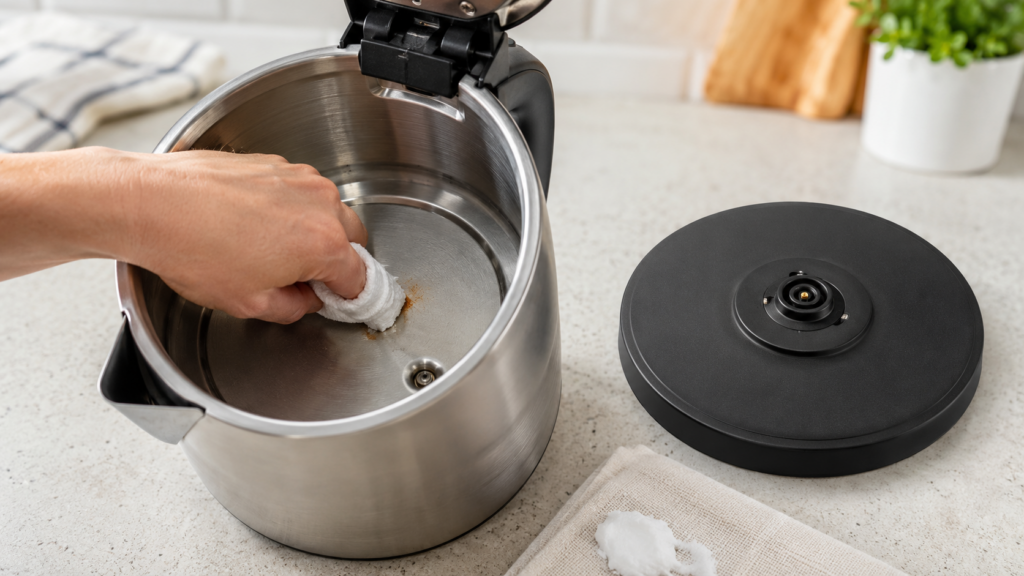
Never submerge the base. Never pour or spray solution near the power connector. The base houses the electrical contacts. Water in there ruins the kettle at best and creates a shock hazard at worst.
For light rust or discoloration around a covered element, the vinegar soak above usually reaches it — the solution sits on the kettle floor where the element lives. For a spot that needs direct attention, wrap a vinegar-dampened cloth around your finger or a brush and dab the area. Damp, not dripping. You’re spot-treating, not flooding.
To clean rust from the bottom of the kettle exterior or around the base, use a barely-damp cloth with a little baking soda paste, wipe, then dry immediately. Keep the kettle unplugged and let it air-dry fully — an hour at least — before it goes back on the base.
And the line worth repeating: if the rust is pitting or flaking off the exposed metal coil itself, this isn’t a cleaning job. That kettle is done. Head to the replacement section.
Stainless Steel vs. Coated Interiors
The right method depends on what your kettle is made of.
- Bare stainless steel: tolerates the vinegar soak, baking soda paste, and light brushing well. Fun fact — many “rust” spots on stainless are actually surface staining from minerals in the water, and they wipe off with baking soda without any real corrosion underneath.
- Nonstick, enamel, or plastic-lined interiors: acid soak yes, abrasion no. Stick to a soft sponge and baking soda paste only. Scratching the coating exposes the metal beneath and guarantees the rust comes back worse.
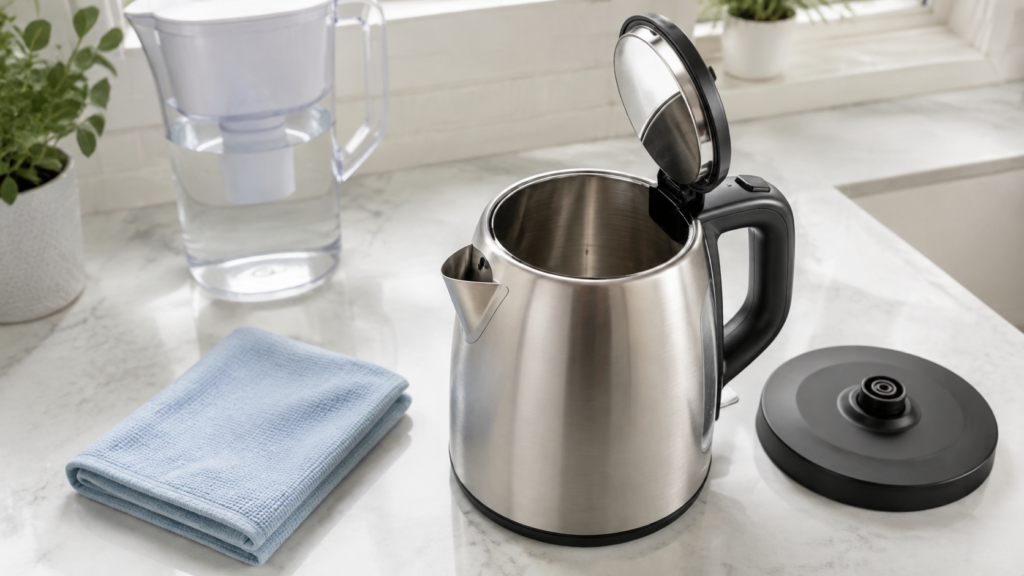
How to Keep Your Electric Kettle From Rusting Again
Removing rust is the easy part. Stopping it is what actually saves you the hassle. Every one of these targets a root cause specific to electric kettles.
- Empty it after every use. Don’t leave water sitting, and never overnight. This alone prevents most rust.
- Leave the lid open to dry. Let condensation escape instead of trapping it against warm metal. Give it a quick wipe if you can.
- Descale monthly. Run a vinegar or citric-acid boil-soak once a month even when you see no rust. Limescale is what seeds future corrosion, so clearing it early keeps rust from ever getting a foothold. This is the same routine you’d use for general everyday kettle care.
- Use filtered or softened water if you’re in a hard-water area. Less mineral load means less scale and less rust.
- Wipe the exterior and base occasionally with a dry cloth so you catch any surface rust early, while it’s still a two-minute fix.
When to Stop Cleaning and Buy a New Kettle
Cleaning has limits. Replace the kettle if:
- Rust keeps flaking into the water despite a proper clean.
- Rust has reached the heating element coil itself.
- Rust returns within a week or two of every cleaning — that’s a sign the interior coating has failed and it’ll only get worse.
- The kettle is old and you’re cleaning it more often than you’re using it.
A decent electric kettle isn’t expensive, and a failing one wastes energy and your time. If you’re at this point, our complete electric kettle buying guide walks through what to look for — including which interior materials resist rust best in the first place. And if your kettle is acting up in other ways too, the symptom-by-symptom troubleshooting guide is worth a look before you decide.
Bottom line: light surface rust is a 45-minute vinegar job and nothing to fear. Rust on the element is a replace-it signal. Learn to tell them apart, dry the kettle out after every use, and you’ll rarely have to deal with either again.
Frequently Asked Questions
Is it safe to drink water boiled in a rusty electric kettle?
In small amounts, iron oxide isn’t toxic, so water from a lightly rust-spotted kettle you’ve cleaned is generally fine. But if rust is flaking into the water or sits on the heating element itself, stop using the kettle — that’s a sign the surface or the electrical seal is failing, not just a cosmetic stain.
Can you use vinegar in an electric kettle without damaging it?
Yes. A 50/50 water-and-white-vinegar solution is safe for cleaning and descaling and won’t harm stainless steel or coated interiors. Just rinse thoroughly afterward and boil a batch of plain water before your next drink so there’s no aftertaste.
Does rust affect the taste of tea or coffee?
It can. Rust and the limescale that comes with it give water a faint metallic or flat taste that carries into tea and coffee. Cleaning the rust and descaling monthly restores a clean, neutral taste.
How often should you descale to prevent rust?
Once a month for average use, or every two to three weeks if you have hard water. Descaling removes the limescale that traps moisture against the metal and seeds rust, so regular descaling is the best rust prevention there is.
How do you tell rust apart from limescale in a kettle?
Rust is reddish-brown, flaky, and appears in patches. Limescale is white, gray, or chalky and usually forms around the waterline and on the element. Limescale is harmless and descales off easily; only reddish-brown flaking is true rust.
Leave a Reply