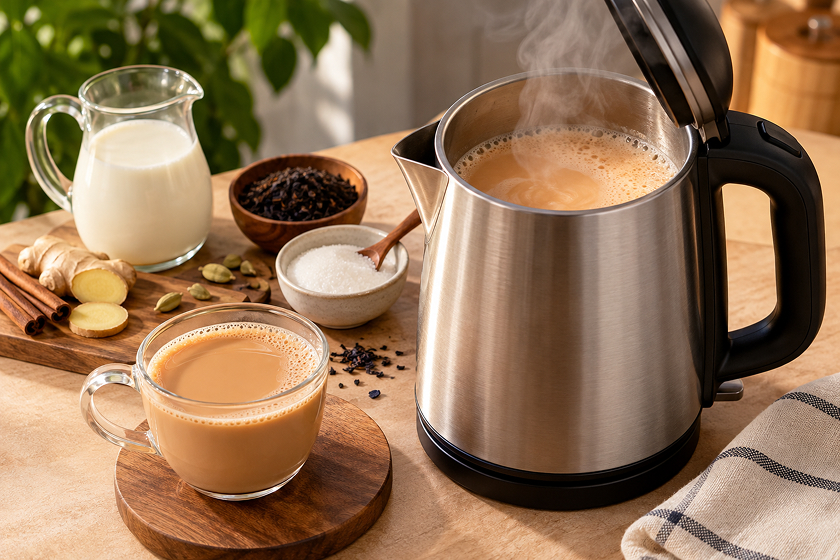
A proper cup of milk tea feels like it belongs on a stovetop, with a pan you stir and watch. But if all you have is an electric kettle in a dorm room, an office kitchen or a hotel, you can still make a genuinely good cup. It takes a little more attention than boiling plain water, and there’s one mistake almost everyone makes the first time, but the result is worth it.
Here’s exactly how to make milk tea using an electric kettle, including the ratios, the timing and the trick that keeps milk from erupting all over your counter.
Can you really make milk tea in an electric kettle?
Yes, you can, and plenty of people do it every day. The honest caveat is that milk behaves very differently from water. Water just heats and boils; milk foams up fast, climbs the sides and can scorch onto the heating element if you walk away. So while the answer to “can we make milk tea in an electric kettle” is a clear yes, it comes with a rule: stay next to it. As long as you’re watching and you don’t let it reach a hard rolling boil, a kettle handles milk tea perfectly well. A kettle with a wider opening and a stainless steel interior makes the job easier, since you can see what’s happening and it’s simpler to clean afterwards.
What you’ll need
For a single strong cup you’ll want water, milk, loose tea or a tea bag (black tea is traditional), and sugar to taste. If you like a spiced chai, keep a few cardamom pods, a slice of ginger or a pinch of cinnamon nearby. That’s it. Nothing here is fussy, and you can scale it up for two by roughly doubling everything.
How to make milk tea, step by step
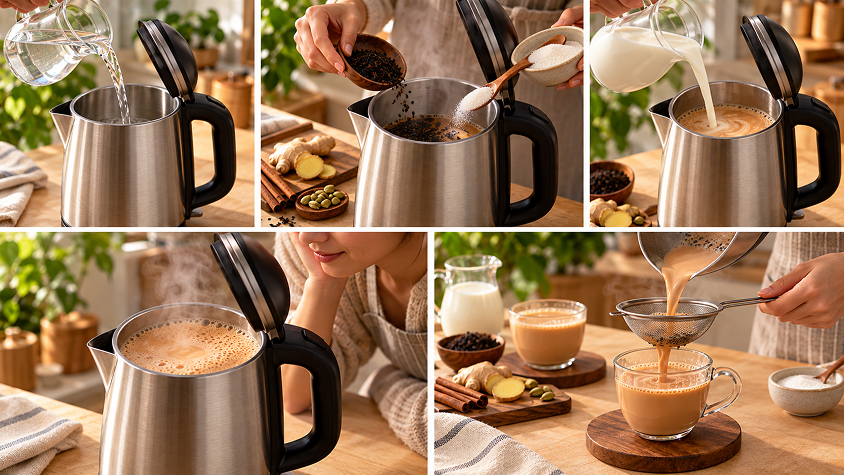
- Start with the water. Pour in about a third of a cup of water per serving and let it come to a boil.
- Add the tea. Drop in your tea leaves or bag along with the sugar, and if you’re spicing it, add your cardamom or ginger now. Let it steep in the hot water for two to three minutes so the tea brews strong before the milk goes in. This step is what gives milk tea its depth, so don’t skip straight to the milk.
- Pour in the milk. Add roughly two-thirds of a cup of milk per serving, so you’re working with about a one-to-two water-to-milk ratio. Switch the kettle back on.
- Watch it closely. Heat the mixture until it’s steaming and just beginning to rise, then switch off before it hits a full boil. If your kettle auto-shuts-off, be ready to flick it back on for short bursts to build the heat gradually.
- Strain and serve. Pour through a small strainer into your cup, taste, and adjust the sugar. That’s a full cup of milk tea from nothing but a kettle.
Using milk powder instead of fresh milk
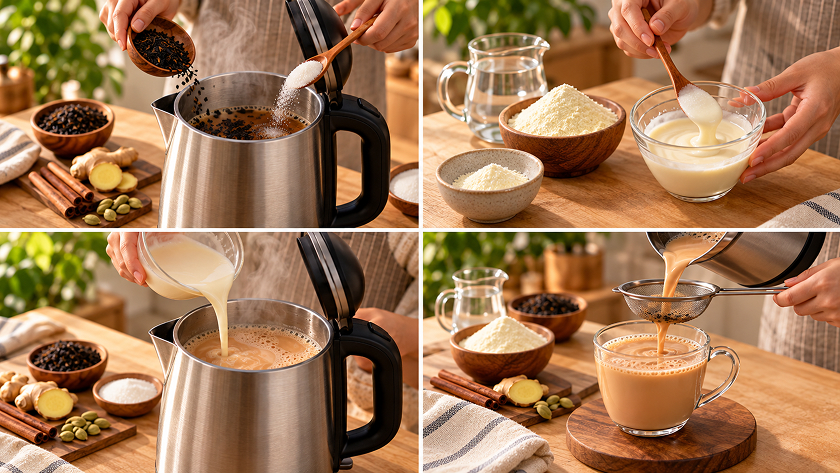
No fresh milk on hand? Milk powder works beautifully and is actually easier to control because it won’t foam over the way liquid milk does. Boil your water, steep the tea and sugar, then stir a couple of spoonfuls of milk powder into a little warm water first to make a smooth paste before adding it in. Mixing it into a paste stops it clumping. Warm the whole thing through for another minute and you’ve got the same creamy result with less risk of a mess.
Getting the strength and ratio right
The balance most people enjoy is about one part water to two parts milk, but this is where you get to make it yours. More milk gives a rounder, creamier cup; more water lets the tea come through sharper. If your tea tastes weak, the fix is usually a longer steep in the water stage rather than more leaves, and if it tastes flat, it often just needs a touch more sugar to lift it. Brew a couple of cups and you’ll quickly find the ratio that suits you.
The boil-over problem, and how to avoid it
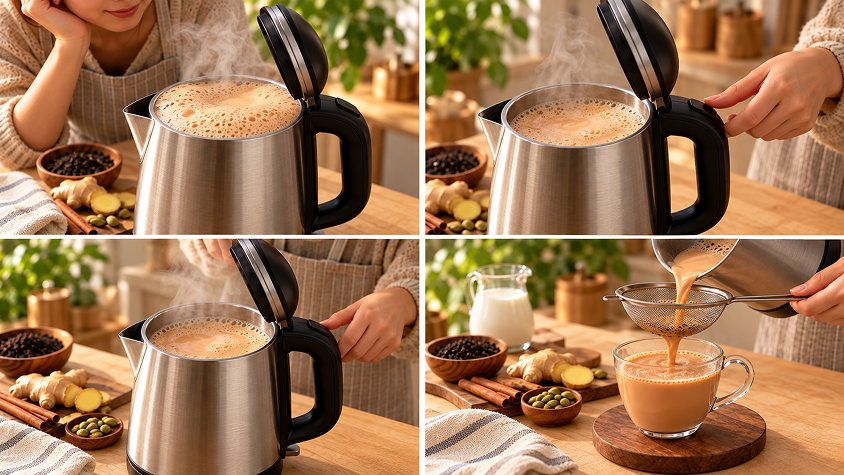
This is the part that catches everyone. Milk contains proteins and fats that trap steam as it heats, so instead of bubbling gently like water, it foams up all at once and can surge over the rim in seconds. The way to prevent it is simple: never leave the kettle during the milk stage, and cut the heat the moment you see the surface start to rise and foam. Heating in short bursts rather than one long blast gives you far more control. If you do let it get away from you, that’s also how milk scorches onto the base, which is a genuine chore to clean, so a few seconds of attention saves you a lot of scrubbing later.
Ways to change it up
Once the basic method is second nature, the variations are endless. A cardamom pod and a thin slice of ginger turn it into a warming masala-style chai. A spoon of brown sugar instead of white gives a deeper, almost caramel note. Swap in green tea and less milk for something lighter, or stir in a little cocoa for a chocolatey version on a cold evening. The kettle doesn’t care what you throw at it, so treat the base recipe as a starting point rather than a fixed rule.
Cleaning up so your next cup tastes right
Milk is the one thing you don’t want to leave sitting in a kettle. Rinse it out with warm water straight after pouring, because dried milk film clings on and can taint the flavor of whatever you make next. If any milk did catch on the bottom, a short soak with a little baking soda lifts it without scrubbing. Give the inside a proper descale every so often too, the same way you would after boiling plain water, and your kettle will keep turning out clean-tasting milk tea cup after cup.
Leave a Reply